Property Valuation for Legal Proceedings: How to Prepare the Evidence
Learn how to define a property valuation for a Dutch legal dispute, prepare evidence and check independence, assumptions and report acceptance.

TL;DR: what makes a legal property valuation useful?
A property valuation for legal proceedings should answer a defined question under a stated value basis and valuation date. The brief should identify the property, parties, intended users, relevant assumptions, inspection scope and evidence. It should also explain whether the valuer is producing an independent report, a party report or a second opinion.
If the valuation enters a legal file, keep local context such as property valuation in Energielabel en Taxatie in, Amsterdam separate from the defined question, evidence and valuation date.
Before you rely on the result, compare the valuation report contents with the question the assignment had to answer.
Do not start with “prove my property is worth more”. Start with the fact the court, mediator or opposing party needs resolved. The NRVT residential practice guidance gives useful context on assignment conditions, evidence, assumptions and reporting. Acceptance is still case-specific: a procedural order, court instruction or agreement can determine which report is usable.
The value of a careful brief is practical. It reduces the chance of a report answering the wrong question, exposes disagreements about dates or assumptions early, and gives the lawyer a clearer evidence trail. It cannot guarantee a result or replace legal strategy.
If one party questions the result, request a second-opinion property valuation that states its purpose, valuation date and supporting evidence.
Does this situation match your question?
These checks help if you:
- homeowners and co-owners in a division, inheritance or damage dispute;
- lawyers and advisers preparing valuation instructions;
- parties challenging a previous valuation;
- anyone deciding between an independent valuation and a second opinion.
The relevant jurisdiction here is the Netherlands. Ask your legal adviser how the report fits the procedural timetable and evidentiary rules.
When the report arrives, compare its purpose, date and evidence with reading a valuation report.
What you will need before you start
Collect the address, ownership documents, contracts, prior reports, plans, permits, photographs, repair records and correspondence that defines the dispute. Mark which facts are agreed and which are contested. Create a simple timeline with the relevant dates.
If you are dividing home equity, keep property valuation during divorce tied to the valuation date and ownership shares.
Ask the lawyer or court what the valuation must establish, who may instruct it, who may ask questions and whether a joint expert is possible. These decisions can affect independence and report acceptance.
Context: why legal valuation needs a tighter brief
In a normal market enquiry, a reader may want a current estimate. In a dispute, the question can concern value on a historical date, a hypothetical condition, a division between owners, loss caused by damage or the effect of a lease. The same property can produce different valid answers when the assignment changes.
If the property is part of a bankruptcy, define property valuation for bankruptcy around the court, trustee or lender’s question.
The NRVT guidance on independence and objectivity is relevant because a report can lose persuasive value when a conflict is undisclosed or the valuer is pressured toward a preferred conclusion. Independence does not mean the report will support your position. It means the method and conclusion can be defended.
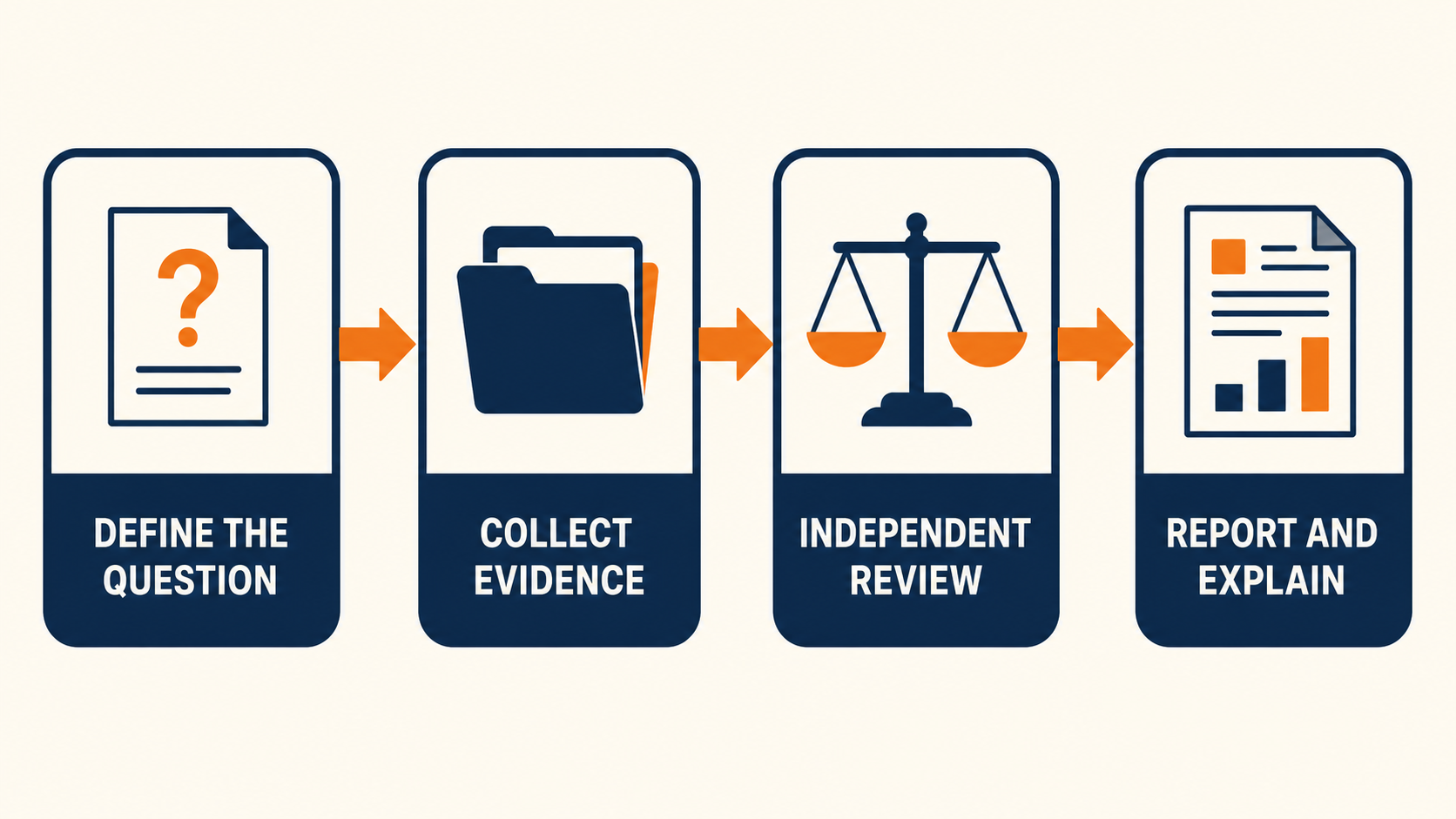
Detailed prerequisites and constraints
Define the value question
State whether the question concerns market value, value in a particular condition, repair cost, loss of value or another basis. Include the hypothetical assumption if the property is assessed before or after work.
When you compare proposals, include property valuation costs in the total so extra work does not come as a surprise.
Fix the valuation date
A historical dispute needs evidence available or relevant to that date. A current inspection can document the property today, yet it may not prove every historical condition. Ask the valuer to explain the reconstruction method and its limits.
Before you request a report, define valuation purposes by the decision the report must support.
Agree the intended user
State whether the report is for a court, mediator, lawyer, insurer or the parties. A report prepared for a lender may not satisfy a legal assignment.
Check independence
Ask about previous instructions, relationships with the parties, financial interests and any other circumstance that could affect objectivity or its appearance.
Step-by-step: prepare the valuation instruction
- Write the disputed question. Use one sentence that a third party could answer without guessing your desired outcome.
- List the value basis and date. State the property condition, assumptions and historical date.
- Build the evidence bundle. Separate agreed documents from disputed material and label each date.
- Confirm the inspection scope. Explain access, hidden defects, destructive testing and document limitations.
- Select an appropriate valuer. Check professional status, relevant case experience, independence and availability.
- Confirm report acceptance. Ask the lawyer, court or other recipient what format and questions must be answered.
- Review the report methodically. Check facts, assumptions, comparables, calculations, limitations and conclusion.
Examples, scenarios and variations
Division after a separation
The assignment may need a value date, ownership shares, mortgage balance and treatment of improvements. A current market estimate alone may miss the historical question.
Damage dispute after a building defect
The valuer may need to separate pre-existing condition, repair cost and loss of market value. A building expert and a property valuer may have different roles, so the brief should say how their evidence fits together.
Challenge to a previous report
Ask the reviewer to identify factual errors, unsupported assumptions, unsuitable comparables or a mismatch between the conclusion and the assignment. A disagreement with the number is not, by itself, proof of poor methodology.
Troubleshooting and common mistakes
Mistake: instructing the valuer to reach a desired number
That weakens the assignment and can raise independence concerns. Instruct the question and evidence instead.
Mistake: mixing value and repair-cost questions
Repair cost and market value can be related while remaining separate calculations. Ask which loss or decision the report must measure.
Mistake: ignoring a historical date
A current report can use current evidence for a past date only through an explained method. Require the report to state what is known and what is reconstructed.
Mistake: assuming a professional register decides the case
Registration is relevant evidence of professional status. It does not guarantee a conclusion, acceptance or court outcome.
Aftercare: review, optimise and repeat
Give the report to the legal adviser before the deadline leaves no time for questions. List factual corrections separately from disagreements about methodology. Ask the valuer to correct a genuine factual error through the appropriate process and preserve the original version.
If the dispute continues, update the evidence bundle rather than commissioning a new report without a defined reason.
FAQ about property valuation for legal proceedings
Should both parties appoint the same valuer?
Sometimes a joint expert can reduce duplicated work, while in other disputes each party needs independent advice. The lawyer, court or parties should decide the role before the instruction is accepted.
Can a mortgage valuation be used in court?
It may provide background, but its assignment and intended user are different. Ask whether it answers the legal question and meets the recipient’s requirements.
What does an independent valuation guarantee?
It supports objectivity and a defensible process. It does not guarantee a value, settlement or court decision.
Can a valuer assess a past date?
Often a professional can provide a retrospective valuation when sufficient evidence exists. The report should state the evidence, assumptions and uncertainty rather than present the historical result as directly observed.
Is a second opinion always necessary?
No. It is useful when a defined factual or methodological concern remains. Commissioning another report only because the first number is disappointing can create cost and delay without resolving the issue.
What can you check before you act?
What should you review before relying on the result?
Before relying on the report, check the question, value basis, date, intended user, inspection scope, evidence, assumptions, independence statement and limitations. Have the legal adviser confirm procedural fit. Recheck the advice when professional guidance or court requirements materially change.
Beste Taxateur helps you organise the questions and evidence around property valuation for legal proceedings, so you can compare providers and prepare the next step. The relevant lender, adviser, municipality or other party decides which report or evidence it accepts.
Ask a question about property valuation for legal proceedings