How to Get a Second Opinion on a Property Valuation
When a second property valuation helps, how to brief an independent valuer and how to compare two reports without asking for a preferred number.

TL;DR: test the disagreement before ordering another report
A second opinion is useful when you can state what needs checking: a factual error, a missing comparable, the valuation date, an overlooked legal restriction, the assignment scope or the independence of the first process. Preserve the first report, ask the intended recipient what it accepts and give the new valuer a complete factual brief.
If you are requesting a second opinion, compare the first report’s evidence with local context such as property valuation in Hypotheek Taxatie Doorstromers, Amsterdam while preserving the original date and assignment.
Before you accept a quote, ask how property valuer independence is protected when several parties are involved.
If you are dividing home equity, keep property valuation during divorce tied to the valuation date and ownership shares.
NRVT guidance treats independence and objectivity as central to a valuation. A second valuer should perform their own research and professional assessment. NRVT has also published a disciplinary explanation that copying an earlier report is not an independent valuation. A new report is not a way to order a preferred number, and a different conclusion is not by itself proof that the first report failed.
Use this sequence:
- Describe the exact concern.
- Check recipient, date and report requirements.
- Give the new valuer the relevant evidence without directing the answer.
- Confirm independence and scope before booking.
- Compare the inputs, reasoning and limitations as well as the final value.
Does this situation match your question?
If you are a homeowner, buyer, lender, mediator, heir or adviser who is considering a second residential valuation in the Netherlands. It applies when an earlier report is disputed, when new facts appear or when a decision has consequences large enough to justify an independent check.
Before you appoint a provider, verify property valuer registration when the assignment requires a registered professional.
It is not a strategy for making a value fit a negotiation. If the real problem is a wrong address, missing document or report that the lender will not accept, identify that problem first.
Before you book an inspection, ask the lender which valuation report the lender accepts fits your application.
What a second opinion can and cannot do
A valuation is a reasoned opinion on a defined assignment and date. The valuer selects and weighs evidence within professional rules. Two independent reports can differ because their dates, information, comparable evidence or assumptions differ. That does not make the disagreement meaningless; it tells you what to compare.
If you are documenting damage, connect property valuation for damage claims with the cause, repair costs and relevant valuation date.
The NRVT register-taxateur information describes objectivity, independence, qualifications and supervision as part of the profession. A second opinion can test whether the process addressed the relevant facts. It cannot decide ownership, tax liability, a divorce settlement or a lender’s policy.
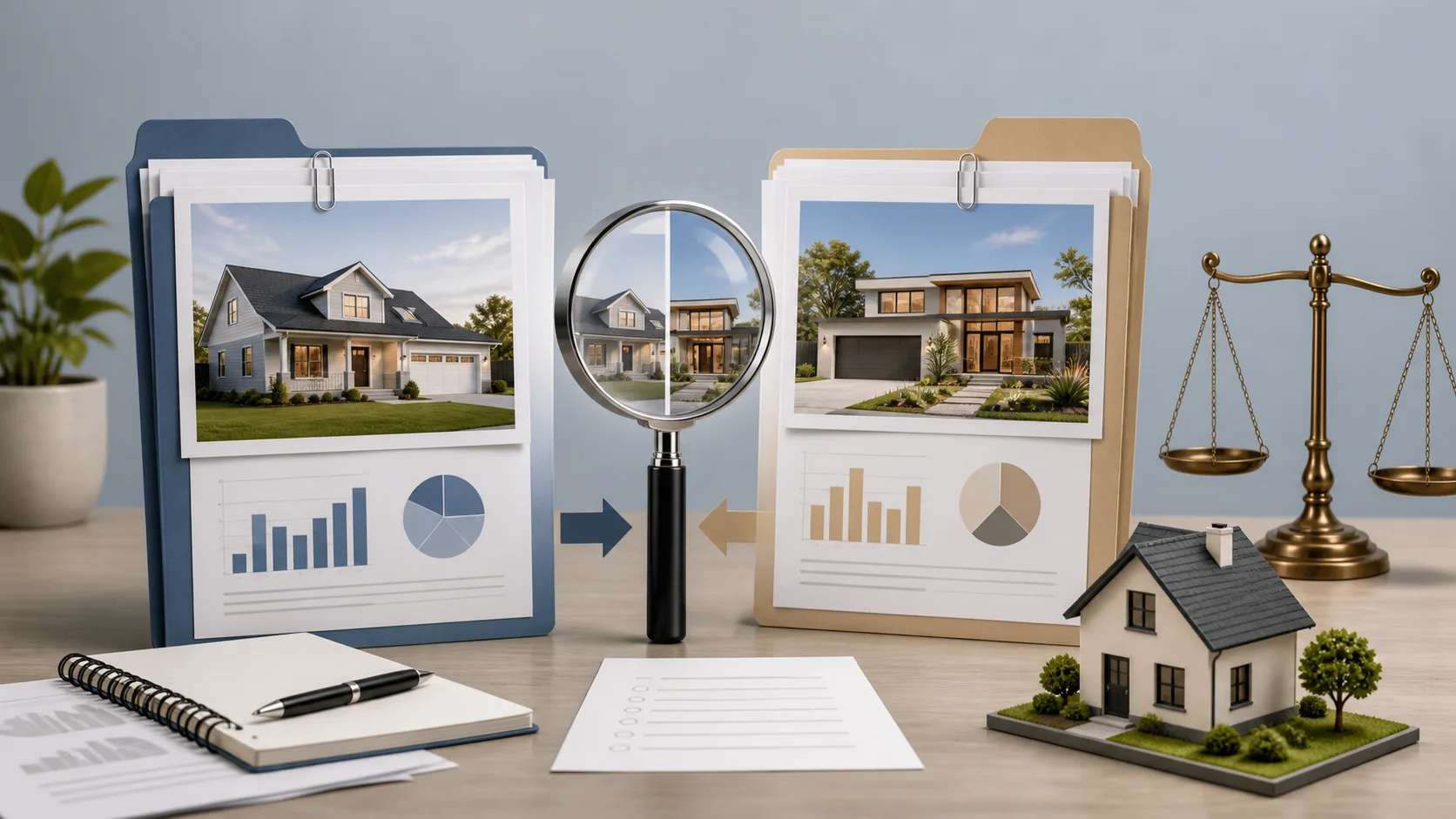
The body visual represents the right comparison: two evidence folders, a review of the inputs and a conclusion that includes uncertainty. It does not depict one report “winning” by default.
When the report arrives, compare its purpose, date and evidence with reading a valuation report.
Documents and questions to assemble
Make the question reviewable before contacting another valuer.
- First report
- Keep the complete report, attachments, inspection date, valuation date and any correction correspondence.
- Exact concern
- Write whether the concern is factual, methodological, legal, date-related, scope-related or about independence.
- Property evidence
- Collect plans, measurements, permits, renovation records, leasehold or VvE documents, energy information and photos.
- Decision and recipient
- State whether the report supports a mortgage, sale, buyout, inheritance, objection or another decision, and who will receive it.
- Relevant date
- Record the date that matters and explain whether new information appeared after the first inspection.
- Independence questions
- Ask the prospective valuer about prior involvement, relationships, referral arrangements and the work they will perform themselves.
Independence, scope and evidence constraints
Independence is a process condition
An independent valuer must be able to form a judgement without a financial or professional interest that compromises the assignment. Tell the valuer about the first provider, the intended recipient and any relationship between the parties.
Before you accept a quote, ask how property valuer independence is protected when several parties are involved.
A copied report is not a second assessment
The new valuer can read the first report, but should not simply repeat its conclusion. Ask which inspection, market evidence, property facts and calculations will be reviewed independently. The NRVT disciplinary decision on copied reports makes this distinction important.
A report format can still be wrong
If the lender needs a validated mortgage report, a second general market opinion may not solve the acceptance problem.
Confirm the recipient requirement in writing.
A higher or lower value is not the test
The useful question is whether the report explains the property and evidence for its assignment. A report that reaches the desired number without better support is not a stronger report.
The second-opinion process in six steps
1. Identify the trigger
Read the first report and mark concrete issues. Separate “I disagree with the value” from “the floor area is wrong” or “the leasehold term was missing.”
2. Confirm the decision
Ask the lender, mediator, notary, tax adviser or other recipient what the second report must do. Confirm the valuation date and whether a new physical inspection is required.
3. Choose an independent valuer
Check registration and relevant experience.
4. Give a complete, neutral brief
Supply the first report and the property evidence, but do not coach the valuer toward a target. State the disputed points and invite an independent conclusion.
5. Compare the reports by input
Compare purpose, date, property description, legal rights, condition, comparable evidence, adjustments, assumptions and limitations. Record where the evidence differs before comparing final numbers.
6. Decide the next route
If there is a factual error, request correction. If the reports use different dates or assignments, ask the recipient which one applies. If there is a professional concern, use the relevant complaint or review route rather than asking a third valuer to settle the dispute informally.
Four reasons to seek a second opinion
A material factual error
The report may contain a wrong floor area, property type, address, ownership detail or renovation status. Give the provider a chance to correct a clear fact before ordering a complete second report.
New evidence appeared
A permit, leasehold clause, VvE decision or condition issue may have been missing from the first file. Explain when the evidence became available and whether it affects the original valuation date.
The assignment was not accepted
The lender or other recipient may reject the report format, date or validation. This is an acceptance problem first. A second report should be commissioned to the recipient’s requirements.
Parties need an independent check
In a separation or inheritance, a second valuer can give both parties a separate assessment.
Mistakes that weaken a second opinion
- Asking for a higher or lower value instead of describing the evidence question.
- Hiding the first report or giving only selected pages.
- Choosing a valuer because they promise a preferred outcome.
- Assuming a registration check proves that the report fits every recipient.
- Comparing two final values without aligning their dates and assignments.
- Treating a different conclusion as automatic proof of misconduct.
- Ignoring the first provider’s correction route for a simple factual error.
The counterargument is that a second report creates more confusion. It can, if the assignments are different or the question is vague. That is why the second-opinion request should specify the decision, date, recipient and review points before work starts.
What to do after the second report
Place both reports and their evidence in one file. Create a short comparison note that lists the meaningful differences and who must decide each one. Do not average the values without understanding why they differ.
If the report is used for a mortgage or legal agreement, send the comparison to the recipient and ask which evidence it accepts. If the disagreement is about professional conduct, use the appropriate complaint or disciplinary information rather than publishing an unsupported allegation.
Frequently asked questions
Is a second valuation allowed?
It can be, provided the assignment is permitted and the second valuer can work independently. Tell the valuer about the first report and any involvement by the same client or firm.
Will a second opinion give a more accurate value?
Not automatically. It may correct an error or add evidence, but two independent opinions can differ because the data and judgement differ. Compare the reasoning and assignment before choosing a report.
Should I show the first report to the new valuer?
Usually, yes. Hiding relevant evidence makes the new assessment less informed. Give the complete report and ask for independent research rather than a copied conclusion.
Can I use a second opinion for a mortgage?
Only if the lender accepts its format, date and validation. Ask the lender before booking.
What if the first report contains a factual error?
Ask the first provider whether it can correct the error and record the change. Commission a second report when the issue is material, disputed or not resolved.
Second-opinion checklist
- The exact concern is written in one or two sentences.
- The purpose, recipient and valuation date are confirmed.
- The complete first report and evidence are available.
- The second valuer’s independence and scope are discussed.
- The report format and validation are accepted by the recipient.
- The comparison covers facts, evidence, reasoning and limitations.
Beste Taxateur helps you organise the questions and evidence around second opinion property valuation, so you can compare providers and prepare the next step. The relevant lender, adviser, municipality or other party decides which report or evidence it accepts.
Ask a question about second opinion property valuation