Property Valuation for Damage Claims: What Evidence Do You Need?
Learn how to prepare a Dutch property valuation for a damage claim, separate repair cost from lost value and build a clear evidence trail.
TL;DR: what should a damage valuation measure?
A damage claim needs the right question before it needs another number. Separate the cost of emergency work, the cost of repairing or rebuilding the structure, the value of contents and any lasting impact on market value. Building insurance often focuses on restoring the insured structure, while a liability dispute or sale may require a market-value analysis.
If you are documenting damage, keep local market context such as property valuation in Beste Taxateur Voor Monumenten en Erfgoedpanden in, Amsterdam separate from repair, rebuild and contents evidence.
When the report arrives, compare its purpose, date and evidence with reading a valuation report.
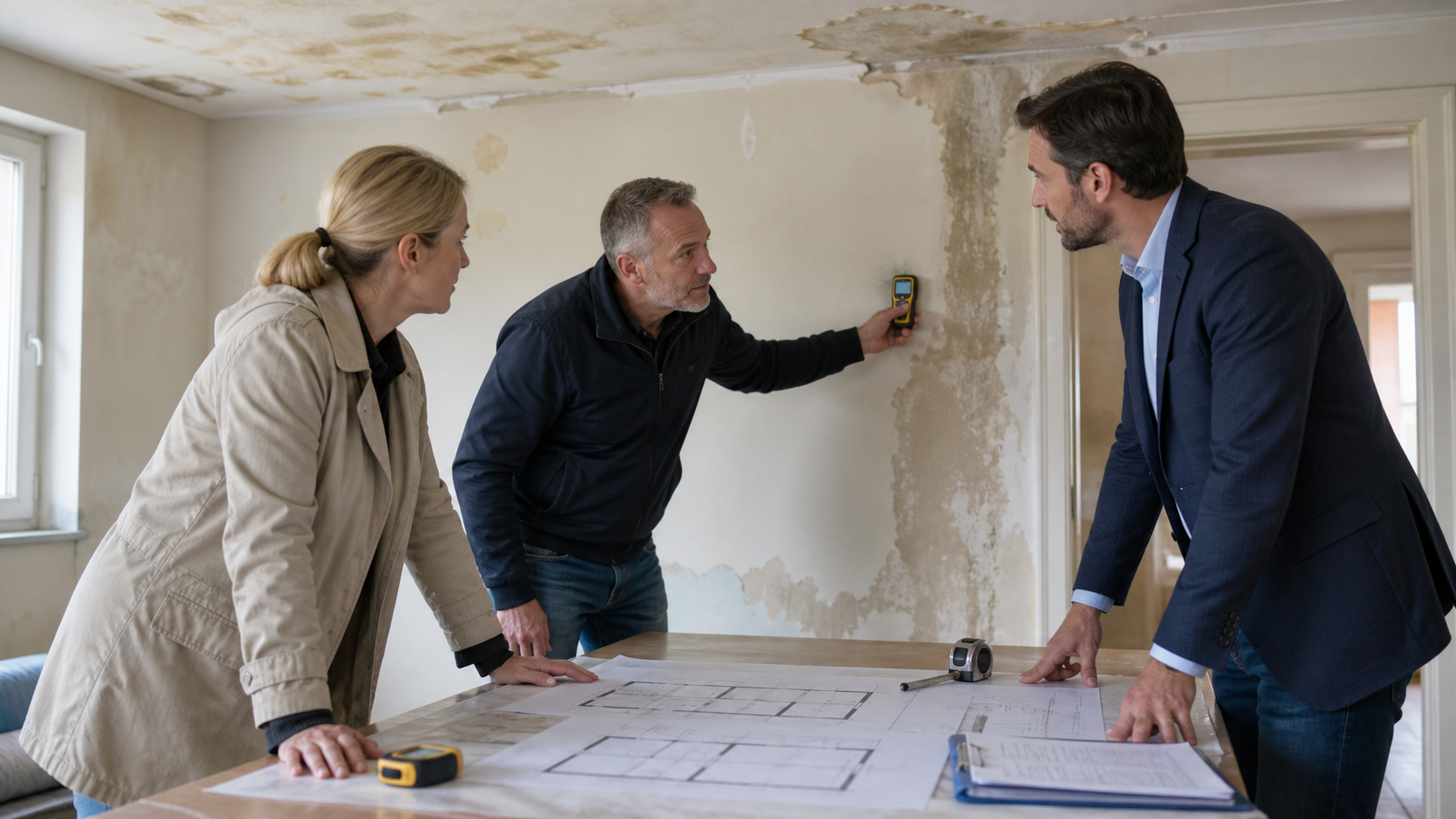
Photograph the condition before clean-up where it is safe, keep damaged materials when instructed, record dates and notify the insurer promptly. Ask the insurer which evidence and expert format it accepts. A property valuer can address market value or a defined valuation assignment. A building expert or contractor may be better placed to measure technical repair work.
If the insurer or another party disputes the value, a second-opinion property valuation can test the original valuation date and supporting evidence.
If the question concerns insurance, keep property valuation for insurance separate from market value and WOZ value. Your policy and the cause of damage determine the actual claim route.
Does this situation match your question?
These checks help if you:
- homeowners dealing with water, fire, subsidence or construction damage;
- owners preparing evidence for an insurer, contractor or liability discussion;
- buyers who discover damage after completion;
- advisers deciding which expert should answer which part of a claim.
It does not decide liability or promise compensation. Legal and insurance advice may be necessary when responsibility is disputed.
If the value will be used in a dispute, match property valuation for legal proceedings to the legal question and evidence required.
Before you request a report, define valuation purposes by the decision the report must support.
What you will need before you start
Create a dated record of the event, discovery, notifications, inspections, temporary repairs and conversations. Keep photographs, videos, invoices, estimates, plans, permits, maintenance records and prior reports. Note which rooms, structures and fixtures are affected.
If the question concerns insurance, keep property valuation for insurance separate from market value and WOZ value.
Ask the insurer whether it wants an inspection before repairs, a loss adjuster, a contractor estimate, a valuer or another expert. Do not commission three overlapping reports before you know how the claim will be assessed.
Context: damage can create several different values
A repair invoice may describe work without estimating the home’s market value before and after the damage. A rebuild calculation may describe the cost to restore the structure without measuring loss of sale value. A contents claim may involve movable items rather than the building. The NRVT residential practice guidance is useful when a valuation assignment needs explicit evidence, assumptions and inspection limits.
The insurance information document from Verbond van Verzekeraars describes common insurance concepts, yet your policy wording still controls. Treat sector guidance as context and ask the insurer to state the claim basis in writing.
Detailed prerequisites and constraints
Protect people and prevent further damage
Take reasonable emergency measures and follow professional instructions. Do not enter unsafe areas or destroy evidence unnecessarily. Record what was done, when and why.
Define the expert role
A building expert may identify the defect and repair scope. A contractor may price the work. A property valuer may assess market value under a defined assignment. A loss adjuster may evaluate the claim. Ask how the roles connect.
Establish the relevant date
Damage claims can involve the date of the event, date discovered, date of inspection, date repairs began and valuation date. Put them in the brief so the report does not use an accidental substitute.
When you compare proposals, include property valuation costs in the total so extra work does not come as a surprise.
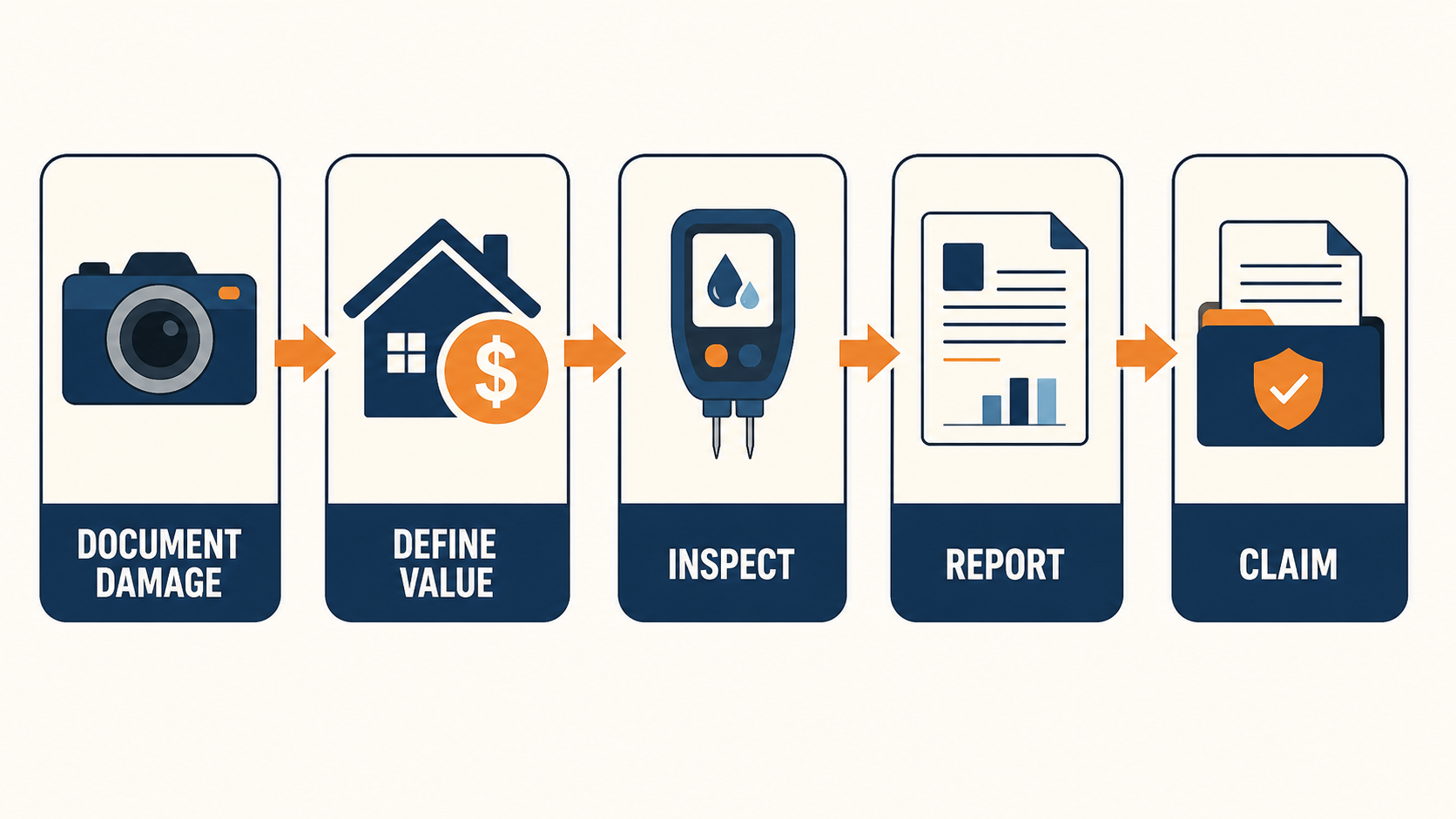
Step-by-step: prepare a property damage valuation
- Notify the right party. Follow the policy or contract notice route and record the time.
- Document the original condition. Photograph the damage, surrounding areas and relevant identifying details.
- Separate emergency work from permanent repair. Keep invoices and explain why temporary measures were necessary.
- Name the desired calculation. Ask for repair cost, rebuild cost, market-value impact or another defined result.
- Choose the appropriate expert. Match technical defects, price, value and legal questions to the right professional.
- Share a dated evidence bundle. Include plans, permits, prior condition, correspondence and inspection notes.
- Review the report against the claim. Check the cause, scope, assumptions, exclusions and calculation date.
- Keep a decision log. Save questions, answers and corrections before agreeing a settlement or proceeding.
Examples, scenarios and variations
Water damage with a clear repair scope
The contractor may provide the best evidence for drying, removal and rebuilding costs. A valuer may be needed if the damage has a lasting market effect or the dispute concerns value before and after repair.
Subsidence or movement
The cause, monitoring period, repair method and remaining uncertainty can matter more than a single current market figure. Ask the technical expert and valuer to state their assumptions separately.
Damage discovered after purchase
The relevant questions may include condition at the transfer date, disclosure, repair cost and loss of value. Give the lawyer and experts the purchase documents and inspection evidence rather than only a current photograph.
Troubleshooting and common mistakes
Mistake: cleaning everything before photographing it
Emergency safety comes first, yet evidence can disappear quickly. Photograph safely and ask the insurer how to preserve or dispose of damaged materials.
Mistake: using a generic market value as the claim amount
A sale value does not automatically equal repair cost or insured loss. Define what the amount is meant to measure.
Mistake: accepting an estimate with no assumptions
An estimate should state scope, quantities, quality level, exclusions and date. Without those details, two apparently different amounts may measure different work.
Mistake: asking one expert to answer every question
Technical cause, repair cost, market value and liability are distinct. Assign them deliberately and check how the conclusions relate.
Aftercare: review, update and repeat
Track repair stages, hidden findings, change orders and final invoices. If a new defect appears, record it as a separate event or explain its relationship to the original damage. Keep the original report and any correction together.
Before closing the claim, confirm which items were accepted, excluded or reserved. A settlement can resolve a payment without proving that every technical issue was assessed.
FAQ about property valuation for damage claims
Do I need a valuer after every damage event?
No. A small, clear repair may be handled through the insurer’s normal process. A valuer becomes more useful when market value, a complex property, a historical date or a disputed amount is involved.
Is repair cost the same as rebuild cost?
No. Repair cost may cover the work needed for the actual damage. Rebuild cost can refer to reconstructing the building under the policy’s definition. Ask which measure the insurer uses.
Can a valuer determine who caused the damage?
Usually that is a technical or legal question rather than a market valuation. The valuer can describe value effects under stated assumptions, while other experts address cause and liability.
What if the insurer rejects my report?
Ask for the reason in writing and which report format or expert it accepts. Compare the assignment and intended user before ordering another report.
Should I accept a settlement before repairs?
Get advice when the cause, scope or long-term effect is uncertain. Make sure the settlement wording and reserved issues are understood before signing.
What can you check before you act?
What should you review before relying on the result?
Before relying on a damage valuation, confirm the event and inspection dates, expert roles, claim basis, evidence, assumptions, exclusions and requested outcome. Check that the visual condition and written report agree. Revisit the claim when new damage, repairs or policy instructions materially change the evidence.
Beste Taxateur helps you organise the questions and evidence around property valuation for damage claims, so you can compare providers and prepare the next step. The relevant lender, adviser, municipality or other party decides which report or evidence it accepts.
Ask a question about property valuation for damage claims