Property Valuation for Refinancing in the Netherlands
Find out when a lender may need a current property valuation for refinancing, what evidence to prepare and how to review the report before switching or changing a mortgage.

TL;DR: confirm the report before you refinance
A property valuation can be part of a Dutch mortgage refinance, but it is not automatically required in every case. The lender decides which evidence it accepts for the current value of the home. The AFM guidance on switching a mortgage notes that a provider may ask for a valuation report, while a WOZ value can sometimes be an alternative. Confirm that point before ordering a report.
If you are refinancing, compare local context such as property valuation in Nhg Taxatie in, Amsterdam with the lender’s accepted evidence and current valuation date.
Start with the decision, not with an assumed valuation product. Ask whether you are switching lender, staying with the current lender, increasing the loan, changing the repayment structure or only trying to change the interest rate. Then confirm the report recipient, value basis, valuation date, accepted format and deadline.
When the report arrives, compare its purpose, date and evidence with reading a valuation report.
Use this sequence:
- Ask the lender or adviser exactly which evidence is accepted.
- Collect the current loan, property and improvement information.
- Compare a full report with any accepted alternative.
- Request a report that names the right purpose, date and recipient.
- Review the value, assumptions, costs and acceptance before committing.
Does this situation match your question?
If you are a homeowner who wants to refinance with the current lender or move to another provider. It also helps when the refinance is connected to a planned renovation, a change in the loan amount, a move or a request to use current equity.
When the report arrives, compare its purpose, date and evidence with reading a valuation report.
It is not mortgage advice. A lender or licensed adviser must assess affordability, income, product conditions and the application as a whole. The valuation answers a property-value question; it does not decide whether refinancing is suitable.
Before you book an inspection, ask the lender which valuation report the lender accepts fits your application.
Before you book an inspection, ask the lender which valuation report the lender accepts fits your application.
What you will need before you start
Prepare the lender’s written request, the current mortgage balance, the expected new loan amount and the target completion date. If you are switching provider, ask for an estimate of the early-repayment charge and the other costs before you treat a lower rate as a saving.
If you need a mortgage report, match mortgage valuation to the lender’s requirements before you book an inspection.
Also gather the address, ownership information, leasehold terms if relevant, recent improvements, permits, floor plans, energy information and the most recent WOZ notice. Keep the purchase deed and earlier report available when they explain a change in the property or the loan.
Context: why refinancing can change the valuation question
Refinancing is more than replacing one interest rate with another. A new provider can reassess income, the current value of the home and the relationship between the proposed loan and that value. The AFM explanation of mortgage affordability describes the general 100% loan-to-value rule and several exceptions. Your application still depends on current rules and the provider’s policy.
The value can affect a risk category, the maximum amount or the evidence a lender wants to see. It does not follow that a higher valuation creates a lower rate. Advice fees, an early-repayment charge, a notary, a valuation and product costs can change the result. The correct comparison is the total cost of staying versus switching over the period you expect to keep the mortgage.
When you compare proposals, include property valuation costs in the total so extra work does not come as a surprise.
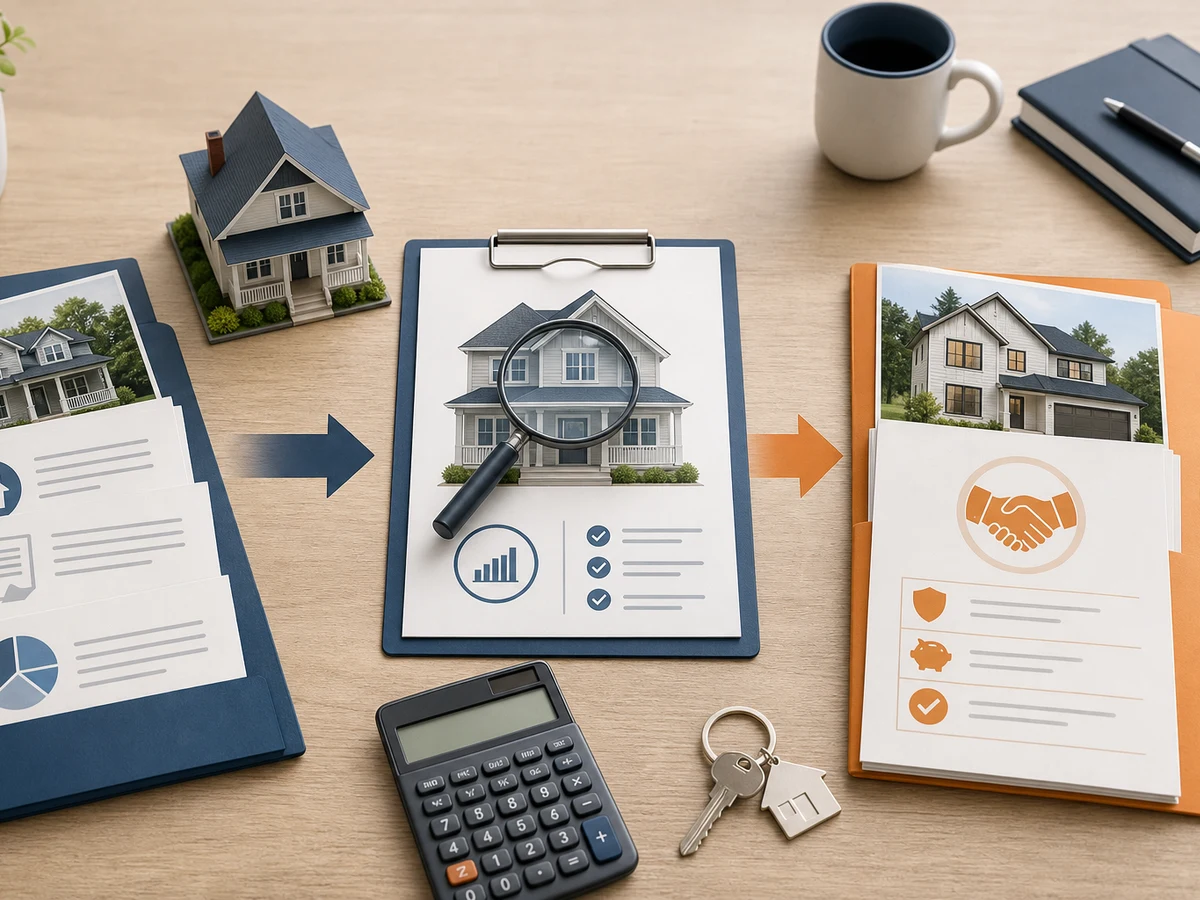
The body visual shows the useful sequence: existing property evidence is examined, a valuation checkpoint tests the current position and only then does the new financing decision make sense. It does not show a guaranteed approval.
Detailed prerequisites and constraints
Requirements checklist
- Decision and recipient: record whether the report is for the current lender, a new lender, an adviser or another party.
- Value basis and date: ask whether the recipient needs market value, value after renovation or another basis, and which valuation date applies.
- Accepted format: confirm whether a physical report, an approved hybrid route, WOZ information or another evidence product is permitted.
- Loan information: have the current balance, proposed amount, repayment form and any early-repayment charge ready.
- Property file: disclose extensions, leasehold, defects, permits, energy improvements and changes since the last report.
- Deadline: allow time for the inspection, research, corrections, validation and lender review rather than planning only for the inspection date.
What can change the answer
The same home can need different evidence for a rate change, a loan increase or a switch to another lender. An accepted alternative may be enough for a straightforward application, while a complex property, a higher loan or a large renovation may trigger a full report. Ask the receiving party, not only the person selling the valuation service.
Do not use a WOZ value as a substitute merely because it is easy to find. It has a municipal purpose and a reference date. Use it only when the lender confirms that it fits the application.
The refinancing valuation process in six steps
1. Define the refinance decision
Write down the current loan, proposed loan, lender, purpose, completion date and reason for refinancing. A change of provider can involve a new affordability assessment, while a product change with the current provider may follow a different route.
If you are using bridging finance, match property valuation for bridging finance to the sale, loan and timing assumptions.
2. Ask for the accepted evidence in writing
Ask whether the lender wants a valuation report, which report types it accepts and how recent the valuation must be. Ask whether the report must be validated and whether the lender wants to commission or receive it directly. This prevents a technically good report from being unusable for the application.
3. Assemble the property evidence
Give the valuer a complete file. Include improvements, permits, leasehold documents, floor areas and defects rather than relying on an optimistic summary. Missing information can delay the report or create assumptions that affect the conclusion.
4. Compare the evidence route with the total cost
If an accepted WOZ route or another permitted product avoids a full report, compare it fairly with the report cost and the level of certainty it gives. Include advice, notary, lender and early-repayment costs. A cheaper evidence route is not useful if the recipient later asks for a replacement.
5. Commission the right report
Give the valuer the purpose, recipient, date and required format before the appointment.
Ask how the report will address unusual features, recent works, leasehold or a material difference from the previous value.
6. Review before you rely on the result
Check the address, ownership, floor area, property description, value basis, date, comparable evidence, assumptions and limitations.
Then ask the lender whether the final report is accepted.
Four refinancing situations
Staying with the current lender
The provider may have a simplified route, but do not assume it. Ask whether the lender needs a new valuation, accepts a WOZ value or can use existing information. Compare the cost and time of each route with the actual benefit of the proposed change.
Switching to a new lender
Expect the new provider to review the application under its own process. The report recipient, required format and age limit may differ from the current lender. Ask for confirmation before an inspection is booked.
Increasing the loan after improvements
The lender may want evidence of the current value or the value after planned work. Provide permits, drawings, specifications and a realistic budget. Do not treat construction cost as an automatic increase in market value; the report must assess the effect on the property.
Refinancing while buying another home
If the old home must be sold before the new financing is settled, the issue may include bridging finance.
Mistakes that make a refinance valuation less useful
Ordering before asking the lender
Why it happens: the homeowner assumes every refinance needs a standard report. Fix: obtain the recipient’s requirements first.
Treating a higher value as the objective
Why it happens: equity and loan-to-value are confused with the full refinance decision. Fix: compare the accepted report, affordability, product conditions and total cost together.
Omitting changes to the property
Why it happens: the owner assumes the valuer can find every improvement independently. Fix: disclose works, permits, defects and leasehold terms in the brief.
Comparing only the interest rate
Why it happens: the monthly number is easier to see than one-off costs. Fix: include early repayment, advice, notary, valuation and lender fees over the expected holding period.
Reviewing the report after the application is submitted
Why it happens: the report is treated as paperwork rather than evidence. Fix: check factual accuracy and acceptance as soon as the report arrives.
Aftercare: review the refinance decision
Review checklist
- Confirm the final report is the version received and accepted by the lender.
- Save the valuation date, value basis, assumptions and limitations with the mortgage file.
- Compare the total cost of the new loan with keeping the existing loan for the period you expect to stay.
- Record any correction request and the final response.
How to improve the decision over time
Keep a simple record of the interest rate, one-off costs, loan balance and expected time in the home. If you later plan another loan change, the record gives the adviser and valuer a clearer starting point. Review the report again when a major renovation, ownership change or move changes the purpose.
Frequently asked questions
Do I always need a property valuation to refinance?
No. Some providers may accept a WOZ value or another route for a particular application. The lender decides what evidence is acceptable, so ask before ordering a report.
Can a valuation guarantee a lower mortgage rate?
No. A value can affect the loan-to-value position, but income, product terms, lender policy and refinance costs also matter. Compare the complete offer rather than assuming the value controls the rate.
Can I use my old valuation report?
Sometimes, if the lender accepts its age, purpose, format and recipient. Ask whether the report still represents the required valuation date and whether a new report is needed after material changes.
Does refinancing after a renovation require a value after works?
It may, especially when the proposed loan reflects planned or completed work. Ask the lender which documents and value basis apply before booking the inspection.
Is a valuation the same as mortgage advice?
No. A valuation provides an opinion of value for a defined assignment. An adviser or lender must assess affordability, product suitability and the financial consequences of refinancing.
Refinancing valuation checklist
- Current lender or new lender is identified.
- Purpose, recipient, value basis and valuation date are confirmed.
- Accepted report format or alternative evidence is confirmed.
- Current balance, proposed loan and refinance costs are recorded.
- Improvements, permits, leasehold and defects are disclosed.
- Delivery, validation and lender-review time are included in the plan.
- The final report is checked for factual accuracy and acceptance.
Beste Taxateur helps you organise the questions and evidence around property valuation for refinancing, so you can compare providers and prepare the next step. The relevant lender, adviser, municipality or other party decides which report or evidence it accepts.
Ask a question about property valuation for refinancing