Property Valuation for Bankruptcy in the Netherlands
Prepare a Dutch property valuation for bankruptcy by fixing the question, date, evidence, sale method and report requirements.

When a home is part of a bankruptcy file, the valuation question needs to be clear before anyone asks for a figure. The curator, lender, owner, lawyer or other recipient may need a value for a sale decision, a negotiation, a past date or a report review. Those uses can call for different instructions.
Before you request a report, define valuation purposes by the decision the report must support.
A valuation report review can expose a missing assumption before the report is shared.
The process below helps you prepare the brief, evidence and checks around a Dutch property valuation for bankruptcy. It does not decide who may sell the property or how the court will weigh the report.
Extra document research or urgent work can change property valuation costs, so ask for the likely scope before agreeing.
TL;DR: prepare the valuation question before requesting a number
Write down the decision the report must support, the valuation date, the property’s condition, the people who will use the report and the evidence available. Ask the curator, lender or lawyer which report format and value basis fit the file. Give the valuer a neutral brief and ask for the assumptions and limits to be stated in the report.
The choice of property valuer should follow the assignment and report recipient.
The NRVT residential practice guidance describes assignment conditions, inspection, evidence, assumptions and reporting. A valuation can support a sale or an evidence file, yet it does not decide ownership, permission to sell, creditor priority or the court’s decision.
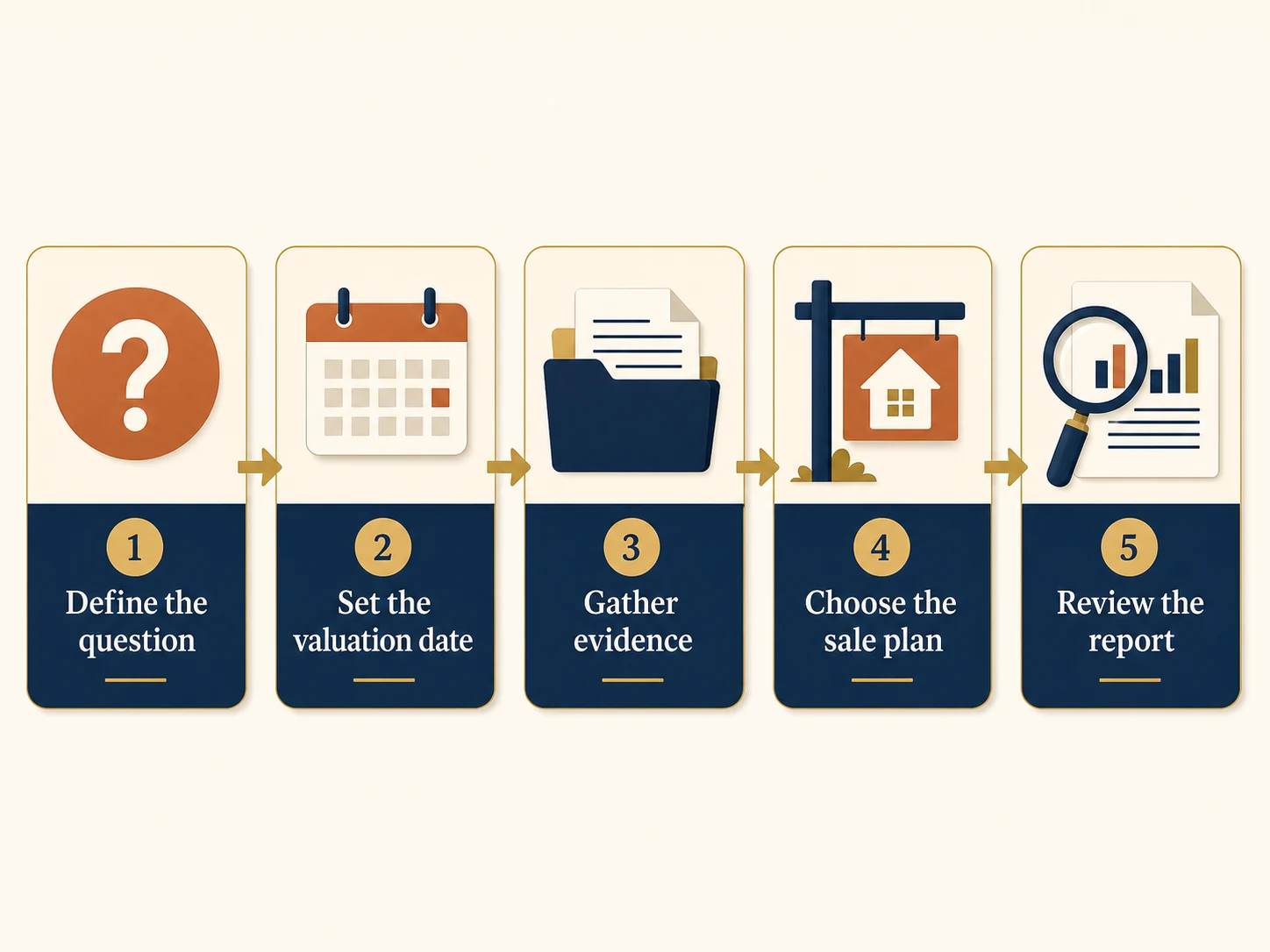
Use this order:
- Name the decision and report recipient.
- Fix the valuation date and value basis.
- Gather property, title and bankruptcy evidence.
- Describe the condition and intended sale method.
- Check the report before it is shared or relied on.
When is this information useful?
This information suits:
- a homeowner whose property is connected to personal or business bankruptcy;
- a curator, lender, lawyer or adviser preparing a sale or evidence file;
- a co-owner or heir who needs a defined value for a division or negotiation;
- a reader reviewing whether an earlier valuation answers the right question.
The setting is the Netherlands. Ask the lawyer or other appointed professional how the report fits the court file, mortgage rights and timetable.
Before you request a report, define valuation purposes by the decision the report must support.
What you need before you start
Collect the address, ownership details, mortgage information, floor plans, permits, lease or tenancy details, photographs, repair records and prior reports. Add the dates of inspections, changes to the property and relevant correspondence. Separate facts that everyone accepts from facts that still need checking.
When the report arrives, compare its purpose, date and evidence with reading a valuation report.
A complete property valuation document set gives the valuer a cleaner starting file. Ask the report recipient what may be shared and whether confidential documents need a separate process.
When a bankruptcy file includes a property, keep the address, property type and valuation date explicit, and compare them with property valuation in Bergeijk only when the local evidence is genuinely comparable.
Write a short question before contacting a valuer. “What is this home worth?” leaves too much open. “What is the market value of the property on the agreed date, in its present condition, for the intended sale decision?” gives the conversation a workable starting point. The final wording belongs to the person responsible for the file.
Before you compare fees, ask each provider about property valuer selection criteria for your property and report recipient.
Why bankruptcy changes the valuation question
Bankruptcy changes who manages the debtor’s assets and who needs information about them. The Dutch government explanation of personal bankruptcy describes the appointment of a curator and the loss of the person’s control over money and possessions. A property valuation may be one part of the information used by the curator or another party.
The court’s bankruptcy information explains the judge-commissioner’s supervisory role and the curator’s work on liquidation. That context matters when you decide who should instruct the valuer, who receives the report and what decision the report supports.
The sale method also needs care. A private sale and a public sale can produce different outcomes, and the available method may depend on mortgage rights, agreements and permission in the file. A valuation can inform that choice while leaving the legal decision with the responsible parties.
If the value will be used in a dispute, match property valuation for legal proceedings to the legal question and evidence required.
Requirements and limits that shape the assignment
Fix the value basis
Market value is often the starting point for a residential valuation. The NRVT guidance says the report should state the value basis and deal openly with assumptions. If the report uses a special assumption, ask why it is realistic for the decision and how the valuer tested it.
Fix the date
The date can be the inspection date, a proposed sale date or a past date tied to a dispute. A current inspection cannot prove every detail of an earlier condition. If a past date matters, ask which records and market evidence support the reconstruction.
Name the intended user
A report for a curator, lender, court file or private negotiation can have different requirements. Confirm the intended user before the instruction is accepted. A report prepared for one recipient may not satisfy another.
Keep roles separate
A valuer can estimate property value. A lawyer can advise on legal powers and procedure. A curator handles the bankruptcy estate within the applicable rules. Keep those questions separate so the report does not appear to answer matters outside the valuation assignment.
Define the property condition
State whether the home is vacant, occupied, rented, damaged, partly renovated or affected by an unresolved defect. Include access limits, hidden areas and documents that have not been verified. A clear condition statement makes later review easier.
As you prepare for a valuation, gather documents needed for a property valuation before the inspection takes place.
Step-by-step: prepare the valuation brief
1. Name the decision
Start with the decision that needs support: a proposed sale, a lender conversation, a division, a dispute or another file purpose.
Record who will receive the report and who is allowed to instruct the valuer.
2. Fix the date and value basis
Write the valuation date and the value basis in the brief. If the file concerns a past date, add the records that can show the home’s condition and the market at that time. If the value depends on a special assumption, ask the valuer to state it clearly.
3. Build the evidence bundle
Place title information, mortgage details, plans, permits, tenancy records, photographs and prior reports in one indexed file. Label each item with its date and status. A disagreement about a document belongs in the brief rather than being hidden in a folder.
4. Describe access and condition
Tell the valuer what can be inspected and what cannot. Note tenants, safety limits, locked rooms, concealed defects and recent work. Explain which condition the report should assess and which facts still need independent checking.
5. Agree the sale method question
Ask the responsible adviser whether the report should assess the home under a proposed private sale, public sale or another stated condition. Do not assume the valuation decides which method is allowed. The report should state the assumption so the recipient can judge whether it fits the file.
6. Choose the valuer
Ask about registration, relevant property experience, independence, availability and the work included in the fee.
Share the file without asking for a preferred figure.
7. Review the report before relying on it
Check the address, rights, area, condition, valuation date, value basis, evidence, comparable properties, assumptions and limits.
Ask the responsible recipient how factual corrections should be handled.
Examples, scenarios and variations
A planned sale before a dispute grows
The curator and lender need a value to compare possible sale outcomes. The brief names the property, date, condition, mortgage position and intended recipient. The valuer explains the evidence and assumptions, while the responsible parties decide what can happen next.
A past date matters
An owner challenges a valuation linked to an earlier event. The inspection happens today, yet the report concerns an earlier date. The file needs dated photographs, permits, repair records, market evidence and a clear explanation of what can and cannot be reconstructed.
A rented home is part of the file
Tenancy terms, access and the condition of the occupation can affect the question. The brief should identify the tenancy facts and whether the report concerns the property in its occupied state. A vacant-home estimate may answer a different question.
An earlier report already exists
Start by checking the intended recipient, date, evidence and assumptions. A factual correction may solve the problem faster than a new report. If the assignment has changed, explain the new question instead of asking for a higher number.
Common mistakes and how to correct them
Asking for the highest possible value
This turns a valuation instruction into a request for an outcome. State the decision, date and condition instead. Let the valuer explain the evidence and uncertainty.
Treating the report as permission to sell
A valuation supports a decision; it does not grant legal authority. Ask the lawyer, curator or other responsible party which permissions and agreements apply.
Leaving the date open
Without a date, the evidence and conclusion can drift. Put the date in the first version of the brief and ask how a past date will be supported.
Mixing legal and valuation questions
“Who may sell?” and “What is the property worth under this stated condition?” are different questions. Give each question to the person who can answer it.
Sending an incomplete file
Missing tenancy terms, permits or repair records can force follow-up work.
Aftercare: review and update
Give the report to the responsible recipient with the indexed evidence bundle. Keep the original report, attachments and correction history together. Mark factual corrections separately from disagreements about the method or conclusion.
If the file changes, record the new fact and ask whether the valuation date, condition or assignment has changed. Review the guidance when the rules or report requirements materially change.
FAQ about property valuation for bankruptcy
Does every bankruptcy involving a home require a new valuation?
No. The responsible party may already have a report that fits the decision and recipient. Ask what the file needs before commissioning new work.
Who should instruct the valuer?
That depends on the bankruptcy file, the property rights and the intended decision. Confirm the instruction with the curator, lawyer, lender or other responsible party before the valuer starts.
Can a valuation decide whether the home is sold privately?
No. It can compare a stated sale condition or support a decision. Permission, agreements and the rights of the parties belong to the responsible legal process.
Can a valuer assess a past date?
A professional may be able to give a retrospective value when enough dated evidence exists. The report should explain the records, assumptions and uncertainty rather than present the past condition as directly observed.
Can a mortgage valuation be used in a bankruptcy file?
It may provide useful background, yet its recipient and assignment may differ. Ask whether the report answers the question in the file and whether the recipient accepts its format.
What if the value differs from an earlier report?
Compare the dates, property facts, condition, evidence, assumptions and assignment before comparing the figures. Two reasoned reports can differ without either one proving that the other was careless.
Which documents should you gather before the decision?
Use the indexed document list, a valuation brief and a date-led evidence timeline. Keep the question, recipient, value basis, condition and sale assumption on one page so that each participant is working from the same facts.
What should you review before relying on the result?
Before relying on the report, check:
- the decision and recipient are named;
- the valuation date and value basis are written down;
- the property’s rights and condition are described;
- the evidence bundle is dated and indexed;
- assumptions, limits and access restrictions appear in the report;
- the responsible party has confirmed that the format is usable.
Beste Taxateur helps you organise the questions and evidence around property valuation for bankruptcy, so you can compare providers and prepare the next step. The relevant lender, adviser, municipality or other party decides which report or evidence it accepts.
Ask a question about property valuation for bankruptcy