Listed-Building Valuation in the Netherlands
What makes a Dutch listed-building valuation different, from heritage status and restrictions to condition, evidence and market context.
Does this situation match your question?
If you are an owner, buyer, heir or adviser dealing with a Dutch listed building, historic property or property in a protected area. It explains what to prepare before requesting a valuation and how to read the heritage-related assumptions in the report.
If you need a regional comparison, place the details from a property valuation in Helmond beside the listed property’s condition, restrictions and use.
Before you rely on the result, compare the valuation report contents with the question the assignment had to answer.
It is not a permit decision. The municipality and, where relevant, the Rijksdienst voor het Cultureel Erfgoed decide how proposed work is handled. A valuer can explain how status, condition, use and market evidence affect the assignment.
If you are valuing a commercial property, define commercial property valuation around its use, income and physical evidence.
What to prepare before the valuation
Collect the information that makes the property’s legal and physical context visible:
- the address and designation, if known;
- registration or municipal heritage information;
- plans, previous permits, heritage reports and maintenance records;
- photographs of the exterior, interior and any defects;
- current use, leases, development plans and restrictions;
- the purpose of the valuation, intended report recipient and valuation date.
If you do not know whether the property is a national, provincial or municipal monument, record that as an open question. Do not assume the absence of a national listing means that no local heritage rules apply.
Before you rely on the result, compare the valuation report contents with the question the assignment had to answer.
TL;DR: the six checks
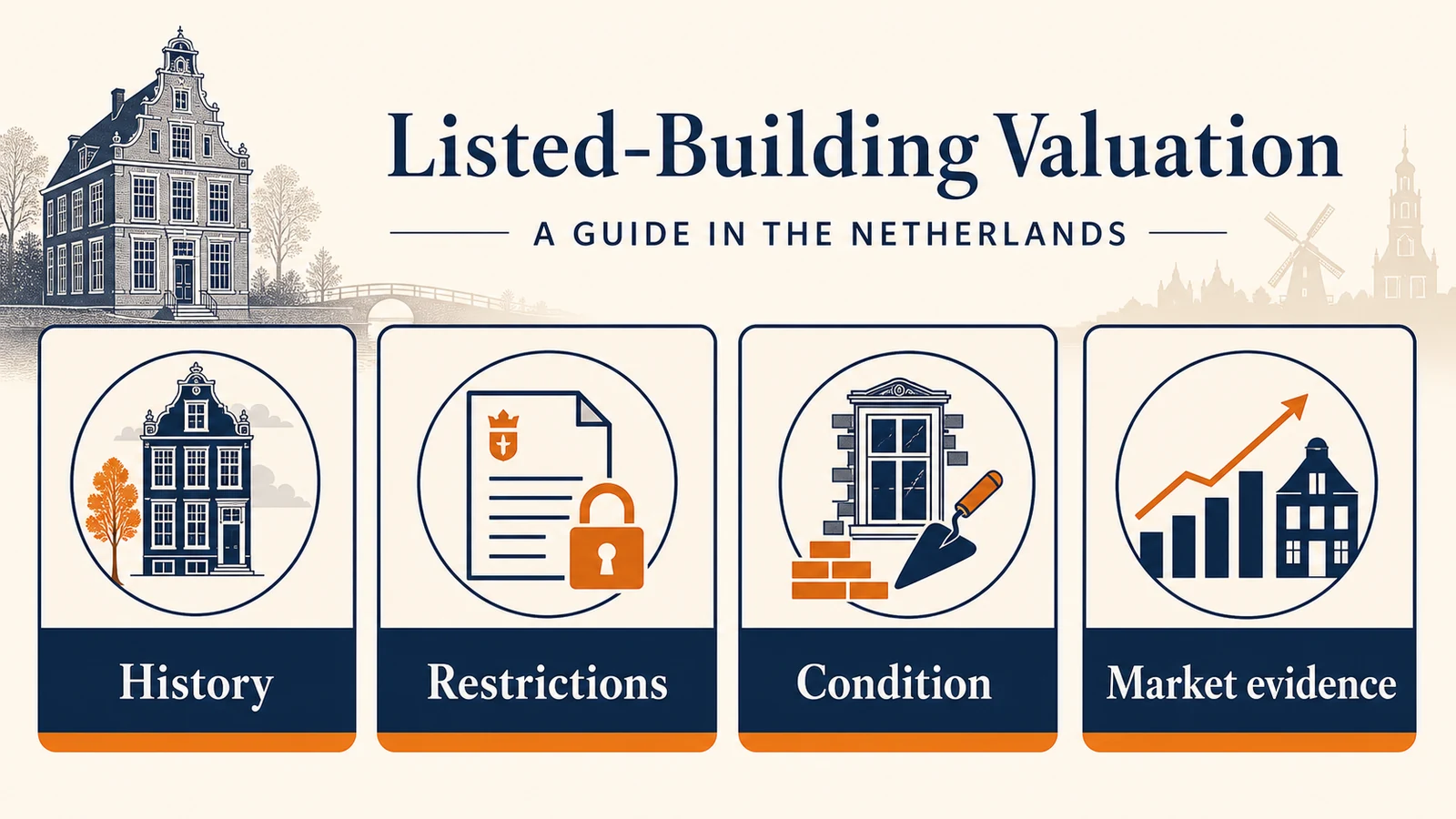
First confirm the property’s heritage status and the purpose of the valuation. Then ask which documents describe designation, permissions, previous work, condition and use. Choose a valuer whose experience fits the property and assignment, agree the scope and date, and check the final report for restrictions, assumptions, evidence and uncertainty. A historic appearance can influence demand, yet it does not determine value by itself.
RCE guidance says that many changes to a monument require an environmental permit, while narrowly defined ordinary maintenance can be permit-free under conditions. The valuation does not decide whether your work is permitted. Check the municipality, Omgevingsloket and RCE guidance for the actual proposal.
- Search the RCE guidance on permits before planning work that may affect heritage elements.
- Verify the heritage status.
- Define purpose, interest and intended user.
- Collect heritage and property documents.
- Match the valuer’s experience to the assignment.
- Discuss condition, use and market evidence.
- Check the report’s assumptions and limits.
Why heritage status changes the valuation brief
A listed building is still a property with a location, size, condition and market. Its heritage status adds another layer: protected elements, maintenance expectations, restrictions on alteration and evidence about the feasible use. That layer can affect costs, risk, buyer demand and the way comparable properties are interpreted.
The effect is not automatic. A well-maintained building in a strong location can attract buyers who value its character. The same designation can create costs or limit adaptations that another buyer considers essential. The report needs to show which facts are known, which assumptions are used and how the purpose affects the conclusion.
When choosing a specialist, look for a property appraiser with the right specialism for the building and the intended use. A relevant track record is more useful than a generic claim of experience.
Six steps for a listed-building valuation
1. Verify the heritage status
Start with the Rijksmonumentenregister where a national designation is possible, then check municipal or provincial information. A building can have local protection without appearing in the national register. Confirm the address, designation type and protected elements with the relevant authority.
2. Define the purpose and property interest
State whether the valuation supports a purchase, mortgage, refinancing, inheritance, division, insurance question or renovation decision. Identify the interest being valued, the intended report recipient and the valuation date. The same building can require a different scope when the decision changes.
3. Collect the heritage file
Gather designation information, plans, prior permits, restoration specifications, maintenance invoices, inspection reports and photographs. Include known restrictions, easements, leases and planning matters. If a document is missing, state that rather than filling the gap with an assumption.
4. Match experience to the assignment
Ask the valuer about comparable listed buildings, the relevant property type and the intended use of the report. Experience with an urban canal house may not answer the same questions as experience with a farm, church conversion or mixed-use monument. Ask how the specialist will handle heritage restrictions and condition evidence.
5. Discuss condition, use and market evidence
The inspection should connect visible condition to maintenance, repair and adaptation questions.
The market analysis should account for what buyers can realistically use, change and finance.
Evidence for a listed property remains specific to its status and purpose.
6. Check assumptions and limits
Read the report for its designation, valuation basis, date, restrictions, inspection extent, source information and assumptions about permits or future work. Confirm which parts are verified and which depend on a municipal decision or specialist investigation. If the conclusion depends on a proposed change, make sure that dependency is visible.
Three situations that need different evidence
Buying a listed home
The buyer needs to understand the maintenance profile and practical use before comparing price. Ask about protected elements, earlier alterations, permits and any work that may require further approval. A valuation helps with the price question; it does not replace a building inspection or legal review.
Financing or refinancing
The lender may need a report that identifies the property interest, purpose and date clearly. Explain the planned use, leases, works and documents that support the value. If the finance depends on a renovation, distinguish current value from a future scenario.
Renovation or energy improvements
Historic fabric can affect the choice of materials, method and approval route. Before relying on a cost or value assumption, ask the municipality whether an environmental permit or heritage consultation is needed. RCE guidance notes that even energy improvements can need a permit when they affect heritage-valued elements.
Common mistakes and how to correct them
- Checking only the national register: also ask the municipality about local protection and planning rules.
- Treating a historic appearance as a value premium: compare location, condition, feasible use and buyer demand.
- Assuming every repair needs a permit: check the precise proposal and the conditions for ordinary maintenance.
- Choosing a generalist without asking about the property: request relevant examples and explain the assignment purpose.
- Hiding unapproved alterations: disclose them so the valuer can state the correct assumption.
- Using a valuation as permit advice: ask the municipality, Omgevingsloket or an appropriate heritage specialist.
- Comparing only headline values: read the valuation date, scope, restrictions and uncertainty before drawing a conclusion.
Check the report and the assumptions
Use this final checklist:
- Does the designation and address match the property?
- Is the valuation purpose, intended user, basis and date clear?
- Are protected elements, restrictions and relevant documents identified?
- Does the condition discussion separate observed facts from assumptions?
- Are proposed works linked to a stated permit or planning assumption?
- Does the market evidence reflect the property’s realistic use and buyer group?
If something important is missing, ask a precise question before sending the report to a lender, buyer or adviser. Keep the answer with the valuation file.
FAQ about listed-building valuations
Does a monument always need a special valuation?
Not every property needs the same specialist. The building’s designation, type, condition, use and valuation purpose determine what experience and evidence are useful. Ask the valuer to explain how those features fit the assignment.
Does listed status automatically increase value?
No. Character and scarcity can appeal to some buyers, while maintenance costs and limits on alteration can reduce demand for others. The effect depends on location, condition, use, restrictions and the market at the valuation date.
Can a valuer tell me whether I need a permit?
A valuer can identify a planning assumption that affects the value, yet the municipality and relevant heritage authorities decide the permit question. Check the proposal through the appropriate official route.
What if the building was altered without clear permission?
Tell the valuer and ask the municipality for the relevant information. The report should state the uncertainty instead of treating the alteration as an established right.
Can a normal building inspection replace the valuation?
No. A building inspection focuses on condition and defects, while a valuation answers a value question for a stated purpose and date. They can complement each other.
Which records help you prepare?
- Keep designation, permit, maintenance and condition records in one dated folder.
Beste Taxateur helps you organise heritage status, property condition and valuation-purpose questions before you contact an appraiser. The municipality, RCE and the report recipient remain responsible for their own permissions and acceptance requirements.
Ask a question about listed-building valuation