What Is Commercial Property Valuation?
A clear explanation of commercial property valuation, its purpose, evidence, methods and the decisions it can support in the Netherlands.

Commercial property valuation is a professional opinion of the value of a non-residential property or property complex for a defined purpose, at a defined date and for defined users. The work can concern an office, shop, warehouse, mixed-use building, development or income-producing property. It is not simply an estimate based on the building’s appearance.
If you are valuing a commercial property, define commercial property valuation around its use, income and physical evidence.
TL;DR
Commercial property valuation connects the property, its use, income potential and risk to a defined purpose, value date and intended user. The report is useful only when those boundaries match the decision it is meant to support.
What commercial property valuation means
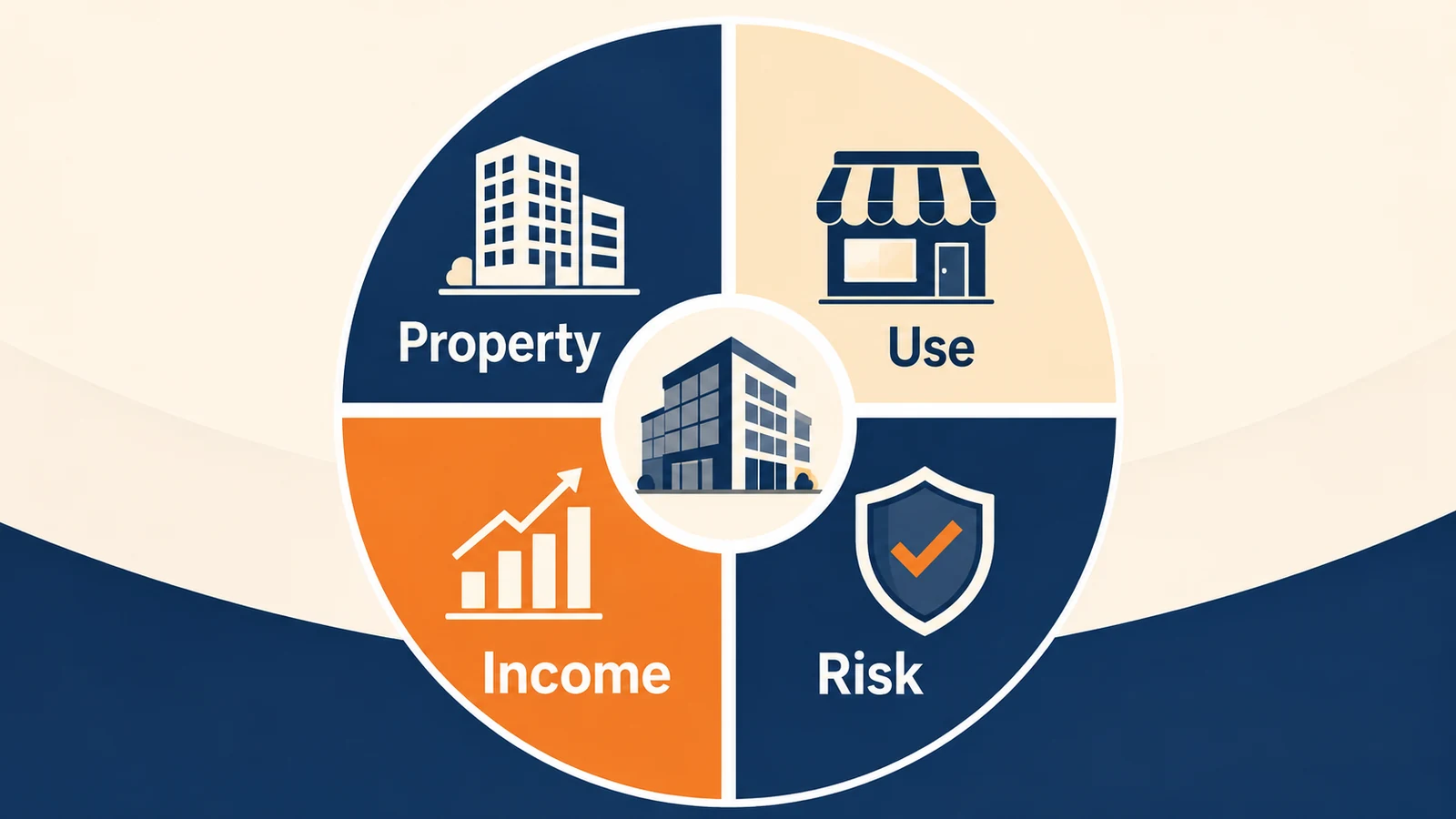
A commercial valuation connects four questions:
- What is the property? Identify the land, buildings, rights, leases, physical condition and legal position.
- How is it used? A shop, office, logistics building and mixed-use property create different evidence and risks.
- What produces value? Sales, rent, income, costs, development potential and market demand may matter.
- What could change the result? Vacancy, lease terms, planning, condition, financing assumptions and market uncertainty can affect value.
The report should state its purpose and basis of value. A valuation for secured lending is not automatically the same as a valuation for a sale, financial reporting, taxation or a dispute.
If you are valuing a commercial property, define commercial property valuation around its use, income and physical evidence.
When you define a commercial assignment, compare the scope of an Eindhoven valuation practice with the purpose, property use and evidence in your brief.
Why the definition matters in practice
A clear definition prevents three common mistakes. First, a reader may confuse an asking price with an independent value opinion. Second, a building may be valued without enough attention to leases, planning or operating income. Third, a value conclusion may be reused for another decision even though the purpose, date or intended user changed.
The commercial property valuation process therefore begins with the instruction, not with a number. The professional needs to know what decision the report will support and who will rely on it.
The four attributes to identify
Property
Identify the physical and legal object. Relevant information can include location, area, construction, land, rights, title, planning, environmental matters, condition and any separate interests. The legal interest being valued can be as important as the walls.
Use
Use affects evidence. A let office is connected to lease terms and occupancy. A retail property may depend on footfall, layout and trading context. A warehouse may depend on access, specification and logistics. A mixed-use building needs its separate uses considered without losing the whole-property relationship.
Income
Income evidence can matter when rent or operating performance supports value. It must be understood in context: lease length, incentives, vacancy, costs, management and market rent may all influence the analysis. Income is an input, not a guarantee of future performance.
Risk
Risk includes uncertainty around condition, permissions, tenants, market liquidity, interest rates, environmental issues and legal rights. A professional report should explain material assumptions and limitations rather than hiding them behind a single rounded figure.
Examples and edge cases
Owner-occupied office
A company may need a valuation for refinancing or financial reporting. The report might focus on market evidence, condition, use and the purpose set by the lender or auditor.
Let retail unit
A shop with a lease needs the lease terms, rent and market evidence considered together. A high rent does not by itself prove a high market value if the lease is short, fragile or above market.
Mixed-use building
A property with a ground-floor shop and homes above can require separate evidence for each use and a check of how the parts operate together. Treating it as an ordinary house or a simple shop can miss the central valuation issue.
Development property
A site with permission or development potential involves assumptions about timing, costs, sales and risk. A residual calculation is not a promise that the development will produce that outcome.
Terms people often confuse
- Market value: an estimate under a defined market-value basis and valuation date, not a seller’s preferred amount.
- Price: the amount paid or offered in a particular transaction.
- Investment value or worth: value to a specific owner or investor, which may differ from market value.
- Market rent: an opinion about rent under a defined basis and date, not automatically the current lease rent.
- Valuation report: the documented opinion and supporting explanation, not just the headline number.
When and how to use the definition
Use this framework before requesting a quote. Write down the property, purpose, intended user, valuation date, available evidence and unusual risks. Then ask which valuation basis and method suit that assignment.
If the report is for finance, confirm the lender’s requirements before instruction. If it is for a sale or acquisition, keep the independent value question separate from the marketing strategy. If it is for financial reporting, taxation or a dispute, ask which standards and disclosures apply.
FAQ about commercial property valuation
Is commercial valuation only about rental income?
No. Income may be important for an investment property, but comparable sales, cost, development evidence, use, condition and market context can also matter.
Who can use the report?
The terms of engagement should identify the client and intended users. A report prepared for one user or purpose may not be suitable for another without consent or additional work.
How long does a commercial valuation remain useful?
There is no universal period. Market conditions, leases, property condition and the valuation date determine how quickly the conclusion can become stale.
Does a valuation guarantee a sale price?
No. A valuation is an opinion under a defined basis. A later transaction can differ because of negotiation, marketing, timing or changed circumstances.
Does a lender accept every commercial valuation?
No. The lender or other recipient sets its own requirements. Confirm the report form, professional standard, independence and date before ordering.
Beste Taxateur helps you separate the property, purpose and evidence questions before you request a commercial valuation. The intended user and commissioning party determine which report and assumptions are useful.
Ask a question about commercial valuation