Hospitality Property Valuation in the Netherlands: What to Prepare
Learn how location, layout, trading evidence, leases and building condition shape a valuation of a restaurant, café or hotel property.

TL;DR: separate property from the business
A hospitality property valuation should show what belongs to the building and what belongs to the operating business. Define the purpose, value basis, valuation date and recipient. Then assemble evidence about permitted use, location, access, seating, kitchen, services, condition, lease, rent, licences and comparable property. If this is your situation, use the steps below to decide which facts and questions matter for you.
If you are valuing business premises, keep local market evidence such as property valuation in Blixembosch Oost, Eindhoven separate from the building’s commercial use, lease and income.
If you are valuing a commercial property, define commercial property valuation around its use, income and physical evidence.
The NRVT’s commercial valuation standards links assignment, data, method, reporting and uncertainty. A useful report makes the scope clear when trading accounts, goodwill, furniture or equipment appear beside the real estate.
The RVO utility-building guidance includes restaurants, cafés and lodging functions in its overview of utility-building uses. Sale, lease and completion rules have exceptions that depend on the building. An energy label is one administrative input, not a measure of trading strength or market value.
Prepare the file in this order:
- Define the decision, value basis, date and recipient.
- Check use, access, layout, licences and building rights.
- Separate property income from turnover, goodwill and movable items.
- Assemble lease, condition, energy and market evidence.
- Review the method, assumptions and uncertainty against the brief.
Does this situation match your question?
If you are an owner, buyer, landlord, lender, investor or adviser dealing with a restaurant, café, bar, hotel, bed-and-breakfast, catering unit or mixed hospitality property in the Netherlands.
If you are valuing a commercial property, define commercial property valuation around its use, income and physical evidence.
It does not value a named business. A planning, licensing, building, food-safety or legal question may need another professional alongside the valuer.
If you are valuing a commercial property, define commercial property valuation around its use, income and physical evidence.
Context: hospitality value follows use and trading fit
The building must work for its intended use. Arrival, visibility, outdoor space, seating, kitchen flow, storage, deliveries, extraction, toilets, fire safety, accessibility, opening conditions and separation from neighbours can affect the users who can operate there.
If you are valuing an industrial building, define industrial property valuation around its use, condition and market evidence.
The operating business adds a second layer. Turnover, margins, reservations, staff costs, brand and goodwill describe an operation. They should not be folded into property value without a defined assignment and reliable evidence.
If you are valuing a commercial property, define commercial property valuation around its use, income and physical evidence.
The body visual links location, trading information and lease terms to the property file. It is an explanatory framework, not a forecast for one venue.
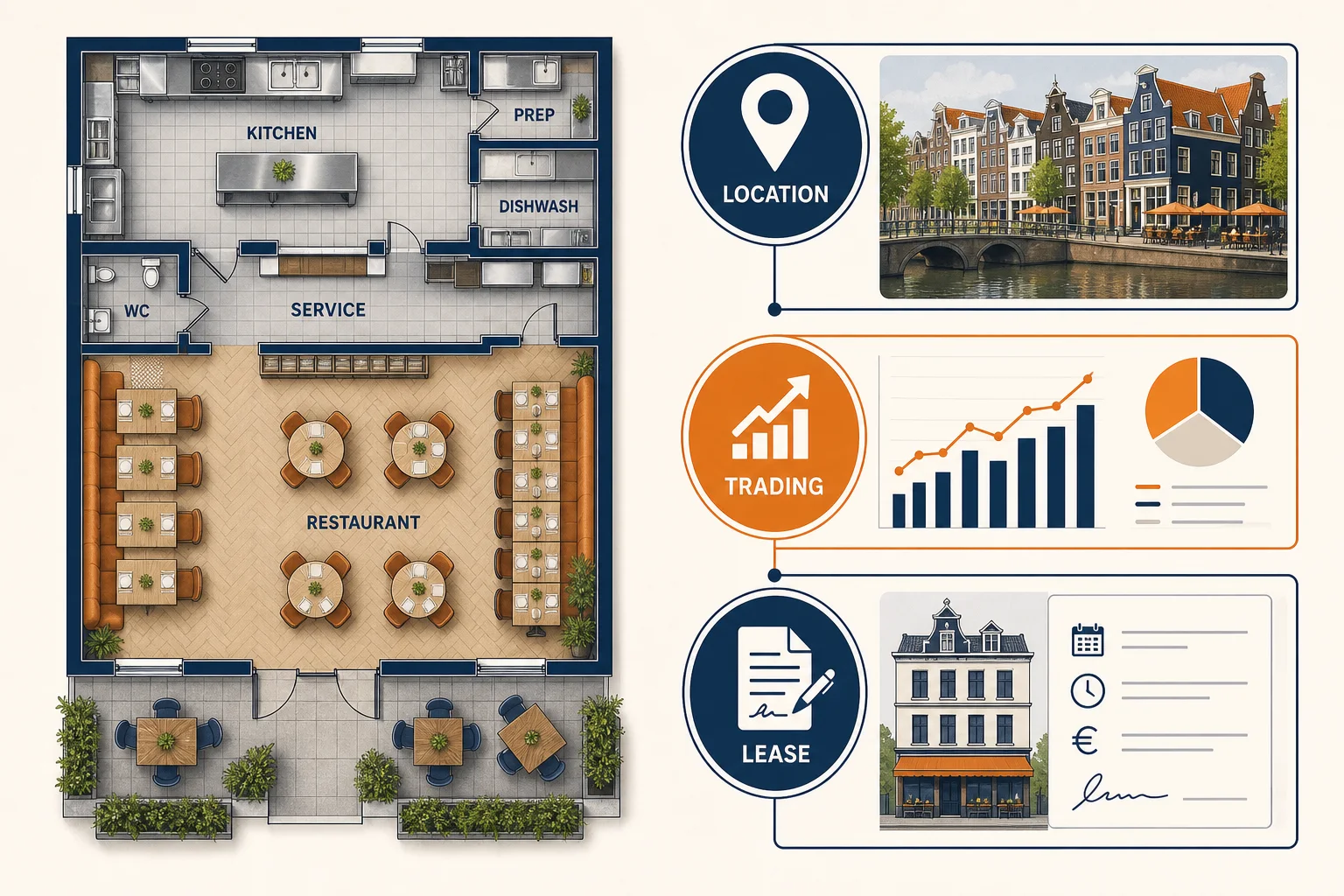
Hospitality valuation evidence to assemble
- Assignment
- Record purpose, value basis, valuation date, recipient, format, assumptions and the treatment of business assets.
- Use and permissions
- Collect permitted use, licences, operating conditions, opening limits, permits, restrictions and any proposed change.
- Location and access
- Describe visibility, arrival, parking, public transport, deliveries, outdoor seating, neighbours and access hours.
- Building and layout
- Provide areas, seating, kitchen, extraction, storage, toilets, installations, fire measures, accessibility and maintenance records.
- Lease and income
- Share rent, indexation, incentives, break rights, service charges, arrears, deposits and tenant duties.
- Market evidence
- Ask for dated sales, rents or income references with a similar use, location, size, lease and condition.
Constraints that can change the result
Trading figures may not transfer
Turnover and profit can depend on a brand, menu, staff, operator or local following. Keep those figures separate from rent, building condition and property rights unless the valuation brief includes them.
Layout can limit the operator pool
A large floor area can still work poorly when the kitchen flow, extraction, storage, toilets, access or seating arrangement does not fit. Ask how the evidence reflects usable space rather than gross area alone.
Permissions and neighbours matter
Opening times, noise, odour, terraces, alcohol, fire safety and delivery conditions can affect the use. Confirm the current legal position instead of treating the current operation as automatic proof of transferability.
A label does not explain running costs
Confirm the function and current RVO rule. Keep energy-label status, installation condition, improvement needs, energy cost and market demand as separate questions.
The hospitality valuation process in six steps
1. Define the decision
State whether the report is for sale, purchase, finance, refinancing, lease, accounting or a dispute. Name the value basis, date and recipient.
2. Verify use and rights
Check ownership, permitted use, licences, operating conditions, access, outdoor areas, restrictions and any proposed change.
3. Describe the property
Record floor areas, seating, kitchen, storage, extraction, deliveries, toilets, installations and condition. State whether furniture, equipment, stock or goodwill sit inside the scope.
4. Split property and business evidence
Place rent, lease clauses and service charges with property information. Keep turnover, margins, brand, staff costs and trading assets in a separate block.
5. Compare relevant evidence
Review date, location, use, size, lease, condition and income basis for each comparable. Ask why a sales, rent or income method fits the question.
6. Review the report against the brief
Check use, areas, lease figures, permissions, assumptions, method, date, value basis and uncertainty.
Four hospitality-property situations
Restaurant or café
Kitchen flow, extraction, seating, terrace rights, deliveries and opening conditions may shape the user pool. Keep the current menu or brand separate from the building.
Hotel or guesthouse
Room layout, shared areas, access, fire safety, service areas, lease and operating model need a clear scope. Room income can describe the business and still require separate property analysis.
Hospitality unit in a mixed building
Check noise, odour, access, shared services, outdoor areas and upper-floor uses. The rights of other occupants can affect the property case.
Vacant hospitality property
There may be no current trading record. Focus on permitted use, physical fit, condition, location, works, costs, lease evidence and the time needed to open.
Mistakes that weaken a hospitality valuation
Using turnover as rent evidence
Why it happens: operating accounts are readily available. Fix: show which building, lease and market facts support the property conclusion.
Treating equipment as part of the building
Why it happens: kitchens and bars are physically attached. Fix: list fixtures, movable equipment, stock and goodwill and state their treatment.
Assuming a licence transfers
Why it happens: the venue is already trading. Fix: verify the permission, holder, conditions and transfer position.
Comparing a venue with an ordinary shop
Why it happens: both may have a street frontage. Fix: match use, extraction, access, layout, lease, condition and customer setting.
Aftercare: keep the file current
Keep the report with leases, permits, licences, plans, service-charge information, maintenance records and market evidence. Revisit the file when an operator changes, a lease is renewed, a layout is altered, a terrace is added or major equipment is replaced.
If the next decision has another purpose or valuation date, ask whether a new assignment is needed. A venue can change its property case without a change in floor area.
Frequently asked questions
Is a hospitality valuation based on turnover?
Not by default. Turnover may describe the business. The property question also needs use, rights, condition, lease, location and comparable evidence.
Are kitchen and bar equipment included?
Only when the assignment defines that scope and the relevant evidence is available. The report should distinguish fixtures, movable equipment, stock and goodwill.
Does a restaurant need an energy label?
The general utility-building rule has exceptions that depend on the function and current guidance. Check the actual building and the current RVO information.
Can a vacant restaurant be valued?
Yes, with a clear assumption about use, works, permissions, costs, timing, lease evidence and the market for a future operator.
What should I send first?
Send the purpose, address, plans, permitted use, lease, rent details, permissions, condition information and report requirements of the recipient.
Hospitality valuation checklist
- Purpose, value basis, valuation date, recipient and asset scope are written down.
- Permitted use, licences, operating limits, access and restrictions are checked.
- Location, visibility, arrivals, deliveries, outdoor areas and neighbours are described.
- Floor areas, seating, kitchen, extraction, storage, toilets and condition are documented.
- Lease, rent, indexation, incentives, service charges and tenant duties are provided.
- Turnover, goodwill, equipment, fixtures and stock are separated from property evidence.
- Comparable hospitality evidence is dated and adjusted for use, position, lease and condition.
Beste Taxateur helps you organise the questions and evidence around hospitality property valuation, so you can compare providers and prepare the next step. The relevant lender, adviser, municipality or other party decides which report or evidence it accepts.
Ask a question about hospitality property valuation