Retail Property Valuation in the Netherlands: What to Prepare
Learn how use, frontage, rent, layout, lease terms and market evidence shape a retail property valuation in the Netherlands.

TL;DR: value the shop as a defined use
A retail property valuation needs more than its floor area and an asking price. Define the purpose, value basis, valuation date and report recipient. Then assemble evidence about permitted use, frontage, visibility, access, layout, floor areas, rent, lease terms, condition, energy information and comparable shops. If this is your situation, use the steps below to decide which facts and questions matter for you.
If you are valuing business premises, keep local market evidence such as property valuation in Castilielaan, Eindhoven separate from the building’s commercial use, lease and income.
If you are valuing a commercial property, define commercial property valuation around its use, income and physical evidence.
The NRVT’s commercial valuation standards ties the assignment, data, method, reporting and uncertainty together. A report should show which evidence supports the conclusion and where the evidence is thin.
Retail property can fall within utility-building energy-label rules. The RVO guidance lists retail among the functions covered by the general sale, lease and completion rules, with exceptions that depend on the building. An energy-label point does not by itself establish rent, market value or low running costs.
Prepare the file in this order:
- Define the decision, value basis, date and recipient.
- Check use, rights, frontage, access and physical layout.
- Separate property income from trading activity, goodwill and fixtures.
- Assemble lease, condition, energy and market evidence.
- Ask how the method, adjustments and uncertainty are explained.
Does this situation match your question?
If you are an owner, buyer, landlord, lender, investor or adviser dealing with a shop, retail unit, showroom or mixed-use property in the Netherlands.
If you are valuing a commercial property, define commercial property valuation around its use, income and physical evidence.
It does not set a value for a named shop. A valuer may need help from a building surveyor, planning adviser, environmental specialist or legal adviser when the file contains issues outside the property scope.
If you are valuing an industrial building, define industrial property valuation around its use, condition and market evidence.
Context: a shop is more than floor area
A retail unit earns its place in the market through a defined use. Visibility, frontage, pedestrian approach, loading, storage, ceiling height, layout, access hours and the relationship between the shop and upper floors can affect the group of users who might rent or buy it.
If you are valuing a commercial property, define commercial property valuation around its use, income and physical evidence.
The legal position matters too. A business can trade under a use that is not automatically transferable. Check planning information, permits, restrictions, rights of access and any difference between the current operation and the permitted use.
The body visual separates rent, sales evidence, space and retail use. It is a reading aid, not a calculation for one property.
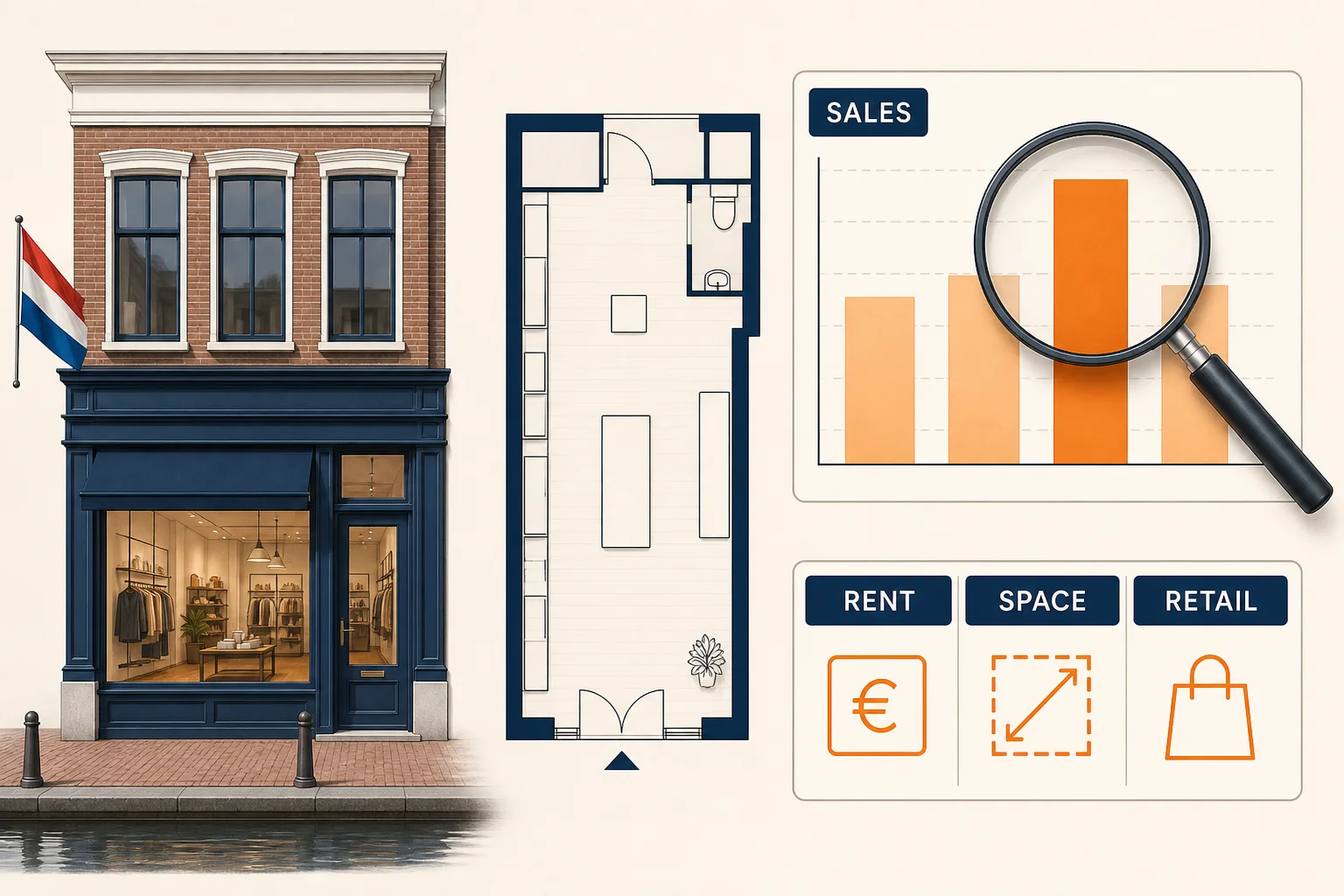
Retail valuation evidence to assemble
- Assignment
- Write down the purpose, value basis, valuation date, recipient, format and assumptions.
- Use and rights
- Collect permitted use, current operation, permits, restrictions, access rights and any planned change.
- Position
- Describe frontage, visibility, footfall context, corner position, loading, storage, access hours and relation to nearby uses.
- Layout and condition
- Provide measured areas, shop depth, service areas, installations, maintenance records, defects and planned works.
- Lease and income
- Share rent, indexation, incentives, break rights, service charges, arrears, deposits and tenant obligations.
- Market evidence
- Ask for dated shop sales, rents or yields that have a comparable use, position, size, lease and condition.
Constraints that can change the result
Trading strength is not the same as property value
Turnover, margins, brand recognition and customer loyalty belong to the business unless the assignment gives them a defined place. A profitable operator can occupy a poorly configured unit, while a well-located unit can be empty during a change of tenant.
Frontage and access must be described, not assumed
Two shops with the same area can serve different users when one has a narrow entrance, weak visibility, no loading access or a deep back-of-house area. Ask how the comparable evidence reflects those differences.
Mixed-use property needs a split view
A shop with an upper home or office should be reviewed as a set of uses. Access, services, rights, condition and income may need separate treatment. Do not let the retail label hide a residential or office component.
If you are valuing an office, define office property valuation around rent, use, vacancy and comparable properties.
Energy information has a defined role
Confirm the building function and current RVO rule. A label or exception helps with a compliance question; it does not replace an inspection of installations, running costs, improvement needs or tenant demand.
The retail valuation process in six steps
1. Define the decision
State whether the report is for sale, purchase, finance, refinancing, lease, accounting or a dispute. Name the value basis, date and recipient.
2. Verify use and rights
Check ownership, permitted use, permits, access, easements, service rights, restrictions and any proposed alteration. Mark gaps rather than filling them with an assumption.
3. Describe the unit
Record frontage, depth, floor areas, storage, loading, access, installations and condition. State whether fixtures, signage, equipment or stock are inside the agreed scope.
4. Separate property and business evidence
Place rent, lease clauses and service charges beside property information. Keep turnover, goodwill, fixtures and trading costs in a separate section unless the assignment joins them.
5. Compare like with like
Review the date, use, size, position, lease, condition and rights of each comparable. Ask what adjustment was made and why a rent, sale or income method fits the question.
6. Read the report against the brief
Check the title, areas, use, lease figures, assumptions, method, date, value basis and uncertainty.
Four retail-property situations
High-street shop
Frontage, visibility, pedestrian approach, delivery access and nearby uses may shape the buyer or tenant pool. Compare units with a similar position, not just a similar area.
Neighbourhood retail unit
Local catchment, parking, daily services, layout and lease stability can carry more weight than a city-centre comparison. Use evidence that reflects the actual customer pattern.
Showroom or destination retailer
Parking, display space, vehicle access, storage, signage and opening restrictions may matter. Separate the building’s utility from the success of one brand.
Shop with an upper floor
Check whether the upper floor is housing, office space, storage or vacant area. Rights and services should make the split between uses clear.
Mistakes that weaken a shop valuation
Using turnover as a property proxy
Why it happens: business data is easy to find. Fix: show which property rights and lease facts support the real-estate conclusion.
Comparing asking rents with completed evidence
Why it happens: listings are visible while completed deals are harder to obtain. Fix: mark the evidence type, date and adjustment for each reference.
Treating every retail unit as interchangeable
Why it happens: search filters focus on area and postcode. Fix: add frontage, access, layout, condition, use and lease terms.
Hiding mixed use in one total
Why it happens: one headline number is convenient. Fix: describe each use, right, income stream and assumption.
Aftercare: keep the file current
Keep the report with the lease, plans, permits, service-charge information, maintenance records and market evidence used for the assignment. Revisit the file when a tenant changes, a lease is renewed, the layout is altered, a new use is proposed or a major repair is completed.
If the next decision has another purpose or valuation date, ask whether a new assignment is needed. A shop’s market position can change even when the walls and floor area look the same.
Frequently asked questions
Is a shop valuation based on rent?
Rent can be a useful input, but the answer depends on the purpose and value basis. Lease length, incentives, indexation, condition, use and comparable evidence also matter.
Does turnover increase the value of the shop?
Not automatically. Turnover may describe the business rather than the property. Goodwill, fixtures and stock need a defined scope and separate treatment.
Does a retail unit need an energy label?
The general utility-building rule has exceptions that depend on the function and current guidance. Check the building’s actual use and the current RVO information.
Can a shop and upper home be valued together?
They can be covered in one assignment when the scope is clear. The report should still explain the separate uses, access, rights, condition and income.
What should I give the valuer first?
Send the purpose, address, plans, permitted use, lease, rent details, service charges, permits, condition information and the report requirements of the recipient.
Retail valuation checklist
- Purpose, value basis, valuation date and recipient are written down.
- Permitted and actual use, permits, access and restrictions are checked.
- Frontage, visibility, layout, floor areas, loading and storage are described.
- Lease, rent, indexation, incentives, service charges and tenant duties are provided.
- Business turnover, goodwill, fixtures and stock are separated from property evidence.
- Condition, energy information, maintenance and planned works are documented.
- Comparable retail evidence is dated and adjusted for use, position, lease and condition.
Beste Taxateur helps you organise the questions and evidence around retail property valuation, so you can compare providers and prepare the next step. The relevant lender, adviser, municipality or other party decides which report or evidence it accepts.
Ask a question about retail property valuation