Property Valuation for an Energy-Efficient Home
Prepare a valuation of an energy-efficient Dutch home with the energy label, installed measures, permits, invoices, comfort evidence and lender requirements.

TL;DR: document performance, not just equipment
An energy-efficient home valuation needs more than a list of solar panels, insulation or a heat pump. The file should show the current energy label, what is physically installed, when it was installed, how it is maintained and which documents support the description. The market value still depends on the whole property and the evidence available for comparable homes. If this is your situation, use the steps below to decide which facts and questions matter for you.
When you prepare a valuation file for an energy-efficient home, record the Dutch terms for labels, installations and report requirements alongside the Dutch valuation terms for home buyers.
The Rijksoverheid explanation of energy labels for homes describes labels from A++++ to G and explains that a label is valid for 10 years. That label is useful evidence in a sale or hand-over context. It does not prove that every household will use the same amount of energy or that the home gains a fixed premium.
Use this sequence:
- Define the purpose and recipient of the valuation.
- Find the current label and record its date.
- List installed measures with invoices, specifications and permits.
- Separate measured use from estimated savings.
- Confirm the report route and value date.
- Check that the report reflects the evidence and its limits.
Does this situation match your question?
If you are an owner or buyer of a Dutch home with insulation, solar panels, a heat pump, efficient glazing, a ventilation system or other energy improvements. It also helps when the improvements are part of a mortgage, renovation or sale file.
If the home has been renovated, record property valuation after renovation with the completed work, plans and supporting documents.
If the home has been renovated, record property valuation after renovation with the completed work, plans and supporting documents.
Energy bills, subsidies, rent points and guaranteed value increases require separate calculations. A valuer assesses the home and the requested value basis, while an energy adviser addresses performance and a lender decides which evidence belongs in a finance application.
The documents needed for a property valuation checklist helps keep planned work visible.
Context: why energy evidence needs interpretation
Energy information affects a property in several ways. Better insulation can change comfort and heating demand. Solar panels can change electricity production and operating costs. A modern heating system can support marketability while creating maintenance and replacement questions. These effects do not all appear in one certificate.
If you are refinancing, match property valuation for refinancing to the lender’s current requirements and valuation date.
An energy label is a standardised document with its own method and validity period. A utility bill shows a household’s use under particular weather and behaviour. An invoice proves that a measure was purchased, while a completion record or specification helps show what was actually installed. The valuation needs the right evidence for the question.
The label can also matter in regulated rental calculations. Rijksoverheid explains that energy labels contribute points in the housing points system, with the full result depending on the home and the other characteristics. That rental context should not be copied into a market-value conclusion.
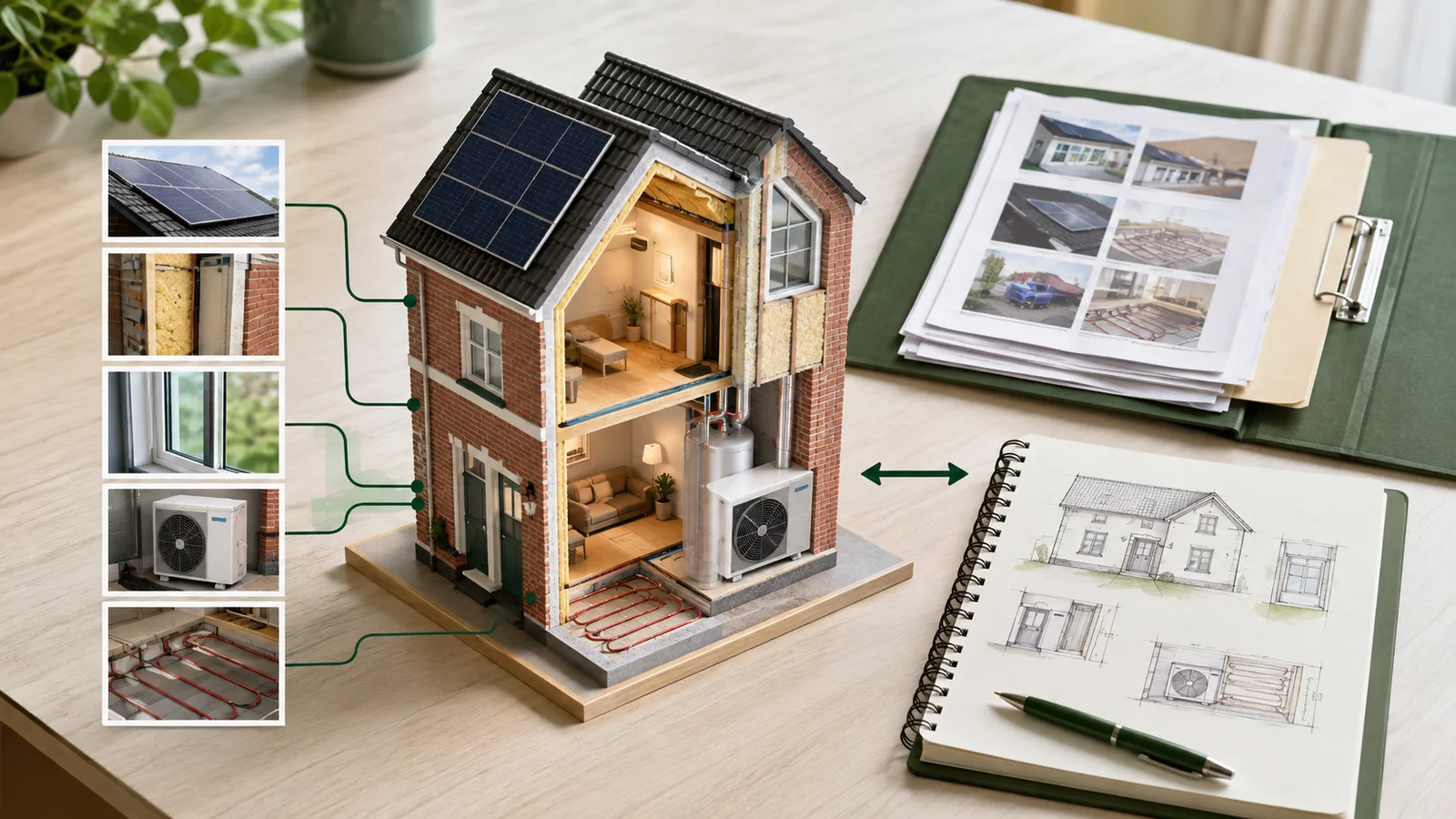
The body visual keeps label, installation, actual use and market interpretation separate. It is a reasoning aid rather than a value calculator.
Detailed prerequisites and constraints
Documents to assemble
- current energy label, issue date and certificate details;
- invoices, product specifications and completion records;
- insulation, glazing, ventilation and heating information;
- solar-panel layout, inverter details and installation documents;
- permits, planning approvals or contractor statements where relevant;
- maintenance records, warranties and replacement dates;
- recent utility information with the period and occupancy context;
- renovation plans for measures that are not installed yet;
- the valuation recipient’s report requirements and deadline.
Label, installation and actual performance
Write down the difference between an installed measure and a planned measure. A quote for insulation is not evidence that insulation is present. A solar-panel invoice does not describe the current condition of the roof or inverter. A label does not replace a technical inspection when the system’s condition is part of the question.
Avoid presenting one utility bill as proof of a permanent saving. Occupancy, thermostat settings, weather and changing energy prices affect actual use. These figures can add context when labelled clearly, while the valuer still needs property evidence and market comparisons.
The energy-efficient home valuation process in six steps
1. Define the decision
Record whether the valuation is for sale, a mortgage, refinancing, renovation finance, inheritance or another purpose. State the recipient, value basis and required date. A lender may ask for a specific report route, while a buyer may want a broader understanding of the home.
2. Check the label
Find the certificate, note the label and issue date, and check that it belongs to the correct address. If the label is older or the home has changed since it was issued, ask whether a new certificate is appropriate.
3. Build the installation file
List each measure, installation date, supplier, specification, warranty and maintenance requirement. Add invoices and photos where they clarify what is present. Record the age of equipment that may need replacement.
4. Separate evidence from estimates
Mark measures as installed, contracted or proposed. Keep actual use, expected savings and energy-price assumptions in separate notes. This helps the valuer assess the property without treating a projection as a fact.
5. Confirm the recipient’s route
Ask which report, inspection, validation and documents are accepted.
6. Review the valuation
Check the label, installed systems, condition, assumptions, comparable properties and value date. If a measure is missing or misdescribed, ask for a factual correction with evidence. Do not ask for a preferred value because an installation was expensive.
Four energy-efficient home situations
Current label with completed upgrades
Provide the certificate and the installation file. The result is easiest to check when the label, invoices and physical condition tell the same story.
Solar panels with uncertain performance
Record panel age, inverter status, ownership, lease or finance terms and any monitoring information. Production depends on orientation, shading, system condition and weather. A sales estimate is not a measured result.
Energy measures planned with a renovation
Separate the current value question from the expected result.
Add plans, quotes and permits to the file, and state which work is not yet complete.
Efficient rental property
Keep the label and property facts with the rent information. Energy data can affect regulated-rent points, while the market-value question still needs tenancy, condition and comparable evidence.
Mistakes that weaken energy evidence
The first mistake is treating the highest label as a price tag. Labels describe standardised energy performance. They do not establish one fixed euro premium across every street, property type and market.
The second is listing equipment without proving installation or condition. A heat pump that is planned, leased or near replacement is a different fact from a well-maintained system that is operating.
The third is copying a household’s energy bill into the valuation as if it were a building measurement. Use bills as context and explain the period, occupants and weather.
Do not count the same improvement twice. An energy budget, an invoice and a label may describe one measure from different angles. Make the relationship clear.
Aftercare: keep the energy file current
Store the label, warranties, service records, invoices and completion documents together. Note replacement, damage or system changes. When a valuation is updated, show what changed since the earlier report and whether the label remains current.
Frequently asked questions
Does a better energy label guarantee a higher value?
No. It can support marketability and lower running-cost expectations, while value also depends on location, condition, size, layout and comparable evidence. A label is not a universal premium.
How long is an energy label valid?
Rijksoverheid states that an energy label is valid for 10 years. Check the issue date and ask whether a new certificate is appropriate after material improvements.
Are solar panels always added to the value?
They can be relevant when ownership, condition, output and market evidence support that conclusion. A lease, finance agreement, shading or an old inverter can change the analysis.
Can an energy label replace a valuation?
No. The label describes energy performance under its method. A valuation answers a value question under a stated basis and date.
What if the work is not finished?
Mark it as planned or contracted, include quotes and permits, and ask the recipient which value scenario is required. Do not describe planned work as completed.
Energy-efficient home valuation checklist
Before sending the request, confirm:
- purpose, recipient, value basis and date are recorded;
- the current label belongs to the property and its date is known;
- installed and planned measures are separated;
- invoices, specifications, permits and warranties are available;
- system age, maintenance and ownership terms are documented;
- utility figures are labelled with their period and context;
- the report route has been accepted;
- the final assumptions match the evidence.
Beste Taxateur helps you organise the questions and evidence around property valuation for an energy-efficient home, so you can compare providers and prepare the next step. The relevant lender, adviser, municipality or other party decides which report or evidence it accepts.
Ask a question about property valuation for an energy-efficient home