Property Valuation Before Selling a Home in the Netherlands
Understand market value, asking price and sale price before selling a home, and learn when a formal property valuation is worth arranging.

TL;DR: three numbers, three questions
Before selling, separate market value, asking price and sale price. Market value is the answer to a defined valuation assignment. Asking price is the price you choose to bring the home to market. Sale price is the result of a negotiation with a buyer at a particular time.
Before setting an asking price, compare local market context such as property valuation in Beste Taxateur Inzuidoost, Amsterdam with the home’s own condition and the evidence behind the valuation.
The documents needed for property valuation guide gives a starting list.
When you compare proposals, include property valuation costs in the total so extra work does not come as a surprise.
A valuation can help you understand market evidence and the home’s position. It cannot guarantee what a buyer will pay. Start by deciding whether you need an informal price conversation, a formal report for another purpose or a documented opinion about market value. Then ask the valuer or estate agent what evidence supports the answer.
Before you appoint a valuer, define the right type of property valuation by the purpose and report recipient.
Does this situation match your question?
If you are a homeowner preparing to sell, considering a private sale or comparing advice from several providers. It also helps when you are selling as part of an inheritance, division of assets or a later financing decision.
When you compare proposals, ask each provider to break down property valuation quotes into scope, timing and total cost.
The right question depends on what happens after the sale. If a lender, court or tax professional needs a report, a sales conversation alone may not meet that requirement. If you only need a starting point for marketing, a formal report may be more than you need.
If the home has been renovated, record property valuation after renovation with the completed work, plans and supporting documents.
Why a sale creates several value questions
An estate agent may discuss an asking-price range. A valuer works from an assignment, valuation date, value basis and property evidence. A buyer then responds to the home, the presentation, competing supply and its own financing. These are connected decisions, yet they are not the same measurement.
The NWWI residential valuation report model includes determining a price for a sale decision among its possible purposes and defines market value as a value at a stated date under defined assumptions. That helps explain why a report is useful for a reasoned decision while still leaving the seller to choose a marketing strategy.
If you are valuing a home, match residential property valuation to the purpose, valuation date and report recipient.
Decide what the valuation must answer
Write down the purpose before you request a quote:
- Do you want an initial indication before speaking to an estate agent?
- Do you need a formal report for an inheritance, division or financing matter?
- Do you want to understand how renovation or condition affects market evidence?
- Do you need a value at a particular date?
- Who will receive or rely on the report?
Before you act on a figure, separate a free estimate and a formal valuation by purpose, evidence and intended use. A free estimate can start a conversation, while a formal assignment produces a different kind of document.
What market value can and cannot tell you
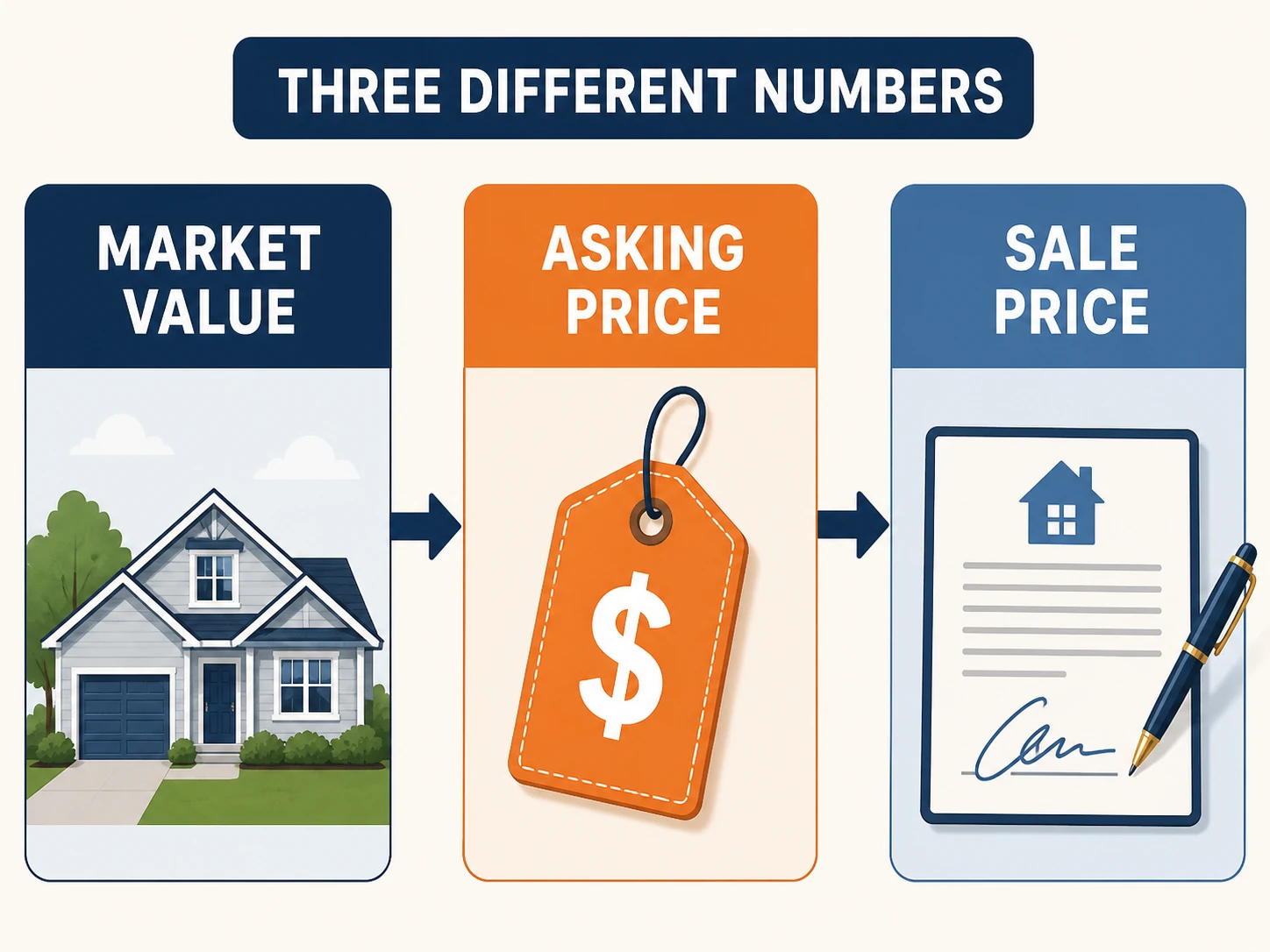
The visual below keeps the three price questions separate. It is useful when two providers use the word “value” while offering different services.
Market value
Market value is produced for a defined assignment and valuation date. The valuer considers the property, location, condition, legal details, comparable evidence and assumptions that apply to the report. It is a reasoned conclusion within that scope.
Asking price
Asking price is a marketing choice. It can be informed by a valuation, recent transactions, competing listings, seller timing and the sales plan. It can sit above, below or close to a market-value opinion for a reason that belongs to the selling strategy.
Sale price
Sale price is agreed with a buyer. It reflects negotiation, financing, conditions, timing and the buyer’s view of the home. A market-value opinion can improve preparation, yet it cannot remove uncertainty from a future negotiation.
The pre-sale valuation process in five steps
1. Define the decision
State whether you need a market-value opinion, a formal report or an initial pricing conversation. Name the recipient and the date that matters.
2. Gather property facts
Collect floor plans, permits, leasehold information, renovation evidence, energy details, VvE documents and records of material changes.
3. Ask how the answer is produced
Ask whether the provider will inspect the home, which comparable properties are considered, what information is missing and whether the result is a formal report. Ask how urgency, validation or extra research affects the fee.
4. Compare the assignment
Give every provider the same purpose, address and target date.
Compare the deliverable rather than comparing a low price with a different product.
5. Use the result with its limits
Read the assumptions, valuation date and evidence. Use the conclusion as one input to your sales plan. Do not present it to buyers as a guaranteed sale price.
Three seller situations
You want to set an initial asking price
An estate-agent estimate may be a sensible first conversation. Ask how it was formed and whether it reflects recent completed transactions, current competition or a model. If you need a report for another party, arrange that separate assignment.
You are selling after renovation
Give the adviser or valuer evidence of the works, permits and costs.
A fresh inspection may be appropriate when condition or usable space has changed.
You need a formal value for a division or inheritance
Tell the valuer the exact purpose, relevant date and parties who will rely on the report. An asking-price discussion does not automatically answer a formal division question.
Mistakes that weaken a pricing decision
- Treating an asking price as though it were a market-value conclusion.
- Asking for a sale valuation without stating the date or recipient.
- Comparing a short estimate with a formal report as identical products.
- Omitting leasehold, VvE, renovation or condition information.
- Using asking prices as though they were completed sale prices.
- Assuming a report predicts the final negotiation.
If advice differs, ask each provider to explain the evidence, date, assumptions and intended use. A different conclusion may reflect a different assignment rather than a simple error.
Recheck the advice when circumstances change
Review the pricing decision if the home changes, the listing period becomes long, comparable supply shifts or the market conditions move. Keep the original valuation date and report intact. A later conversation can use new information without pretending that the old report was produced on a new date.
Frequently asked questions
Do I need a formal valuation to sell my home?
Usually not for the act of listing itself. You may need one for an inheritance, division, financing or another defined purpose. Ask the recipient and choose the report from that answer.
Can a valuer tell me the right asking price?
A valuer can provide a market-value opinion within the assignment. The asking price remains a sales and marketing decision that also involves timing, presentation and negotiation strategy.
Is market value the same as the amount I will receive?
No. Market value is a conclusion at a stated date under defined conditions. The amount received depends on a later buyer, negotiation, costs and transaction terms.
Should I use the highest valuation?
Do not choose by amount alone. Ask whether each provider used the same purpose, date, evidence and assumptions. A higher number with weak fit can mislead your pricing decision.
What if the home has a leasehold or VvE?
Tell the provider early. Legal rights, ground rent, VvE finances and maintenance plans can affect the evidence and the work needed.
Seller checklist
Before you request a quote, write down:
- the decision the valuation must support;
- the valuation date and intended recipient;
- the property changes and documents available;
- whether you need an inspection and formal report;
- the evidence you want explained;
- the date by which you need the result.
Beste Taxateur helps you organise the questions and evidence around property valuation before selling a home, so you can compare providers and prepare the next step. The relevant lender, adviser, municipality or other party decides which report or evidence it accepts.
Ask a question about property valuation before selling a home