Property Appraiser Comparison Criteria: What Should You Measure?
Compare property appraisers on assignment fit, report acceptance, evidence, independence, timing, scope and total cost with a transparent scorecard.

What can you compare with the scorecard?
Price comparisons are easy to start and easy to get wrong. Two proposals may use the same word, “valuation”, while covering different work, dates, evidence or report recipients. A fair comparison begins with one written brief and gives each provider the same chance to answer it.
When a lender is involved, prepare a mortgage valuation request that states the report purpose, delivery method and recipient.
This scorecard helps home buyers, owners and borrowers compare proposals for a stated job. It is also useful when an executor, solicitor or lender needs a report. It does not name a universal winner. It shows which proposal answers your questions with the strongest evidence.
If you need a valuation in the Netherlands, match property valuation in the Netherlands to the property type, purpose and report recipient.
TL;DR: compare fit before price
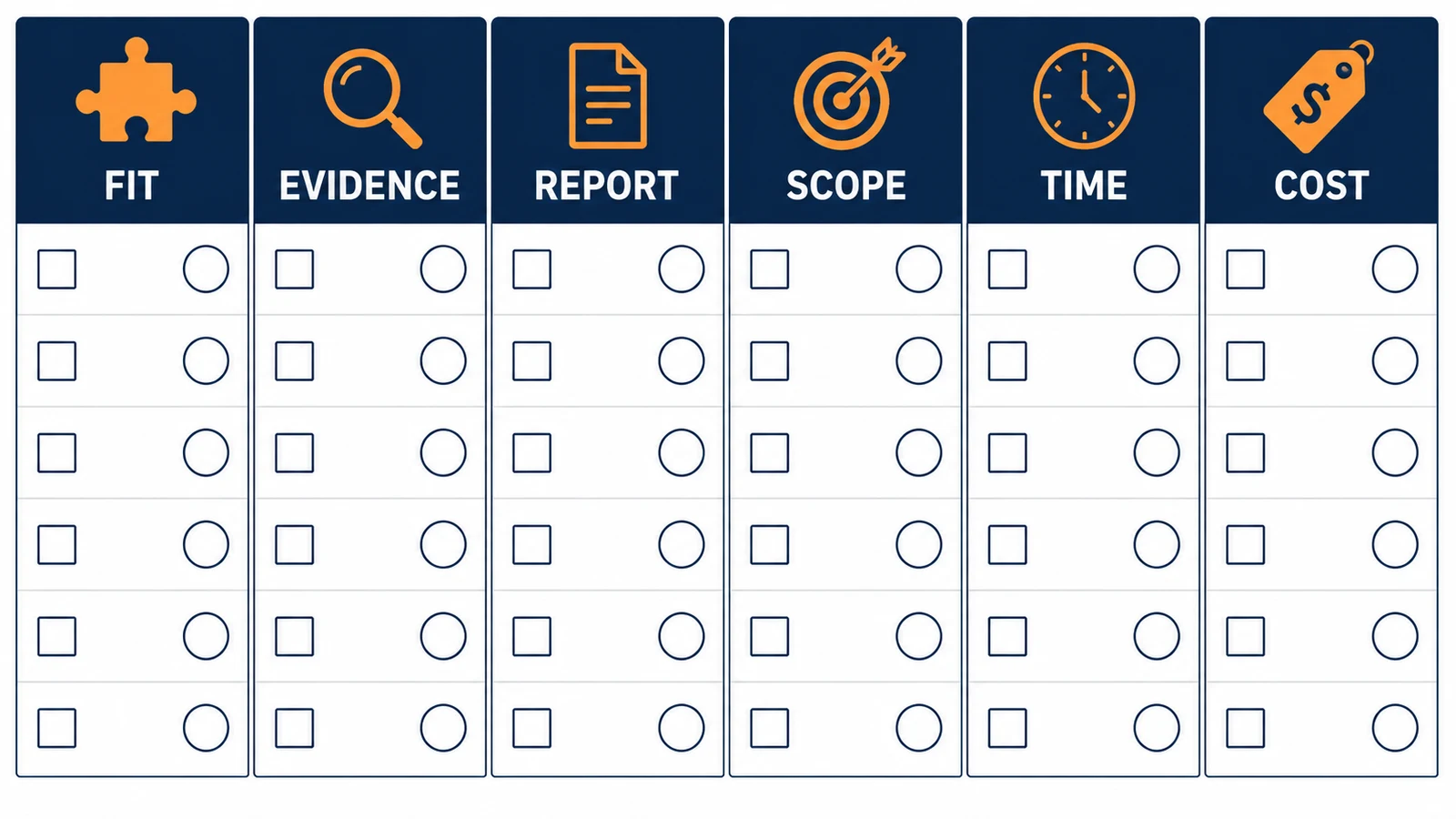
Give every provider the same facts. Score each proposal from 0 to 2 for:
- Assignment fit.
- Evidence plan.
- Independence.
- Report acceptance.
- Inspection and delivery scope.
- Total fee.
Write one sentence beside every score. A total without an evidence note is only an impression. A higher total means “better fit for this brief”, not “best property appraiser in every situation”.
For the broader choice, compare property valuers on the same brief.
The comparison method
Ask for the name of the person who will inspect and sign, the report purpose, the inspection scope, documents needed, delivery conditions, correction process and total fee. Send the same brief to every provider.
If you are comparing full proposals, property valuation quotes are easier to assess once every provider has answered the same brief.
Then score the answers. A score of 2 means the proposal answers the question clearly and the answer fits the assignment. A score of 1 means part of the answer is clear or a condition remains. A score of 0 means the provider does not answer, declines the assignment or offers terms that do not fit.
Profile A: a clear assignment fit
This proposal names the professional, describes the inspection, confirms the report recipient and lists the documents needed. It explains timing conditions and gives a total fee. The provider can describe recent work with the same property type.
This profile may score well even when the fee is not the lowest. Its advantage is fewer unknowns. You can still test every claim and ask the recipient whether the report type is accepted.
Profile B: a low headline fee
This proposal has a low first-line price and a fast promise. It does not say who will sign, what the visit covers or whether validation is included. It asks for more details after booking.
This profile is not automatically poor. A simple home with a clear purpose may need little extra work. The score stays low until the missing answers arrive. The comparison is about evidence, not the tone of the sales copy.
Six criteria and a 0-to-2 score
Assignment fit
Give 2 points when the provider confirms the purpose, property type, value date and report recipient. Give 1 when one item is still open. Give 0 when the reply treats a different job as if it were yours.
Evidence plan
Give 2 points when the reply states which property facts, documents and comparable evidence will be considered. Give 1 when the approach is described in broad terms. Give 0 when you cannot tell what the result will be based on.
Independence
Give 2 points when relationships, payment and the person signing are clear. Give 1 when the provider gives a short assurance but leaves a relationship unanswered. Give 0 when a conflict is visible or the question is avoided.
Report acceptance
Give 2 points when the requested report and delivery method match the recipient’s requirements.
Give 1 when the provider needs the recipient to confirm a condition.
Give 0 when the report type is plainly unsuitable.
Inspection and delivery scope
Give 2 points when the visit, access conditions, delivery date and factual-correction process are written down. Give 1 when one condition needs confirmation. Give 0 when speed or inspection claims are too vague to assess.
Total fee
Give 2 points when VAT, validation, travel, research, urgency, a second visit and corrections are addressed where relevant. Give 1 when a supplement is possible but the amount is clear. Give 0 when the first price hides work that your brief plainly needs.
How the score changes by situation
A straightforward home purchase
The property facts may be easy to describe, so assignment fit, report acceptance and total cost carry much of the decision. Do not drop registration or independence from the check because the file looks simple.
An apartment with association records
Evidence and scope deserve more attention. Ask about service charges, reserve funds, planned works, building insurance, leasehold and the documents of the homeowners’ association. A provider who handles mainly detached homes can still be suitable when the approach is clear.
A renovation or unusual property
Give extra weight to experience and evidence. List permits, invoices, changes, mixed use, a listed status, rented rooms or development potential. A proposal that answers these facts can outrank a cheaper reply that ignores them.
When a scorecard is the wrong tool
A score cannot settle a report-recipient rule, a conflict of interest or a missing document. Do not average away a serious problem. A proposal with a high total can still be unsuitable when the report will be rejected or the professional is not independent.
The score also says little about technical quality that you cannot inspect before the assignment. Use the provider’s answers as a screening tool and keep a record of what was promised.
FAQ about comparing property appraisers
Should price receive the highest score?
Usually no. Price matters, though an unsuitable report or missing evidence can make a cheap proposal poor value. Give the fee one part of the total and explain what it includes.
Can I compare quotes with different report types?
No. First identify the report recipient and purpose. A private estimate, mortgage report and legal valuation answer different questions.
Is a 12-point total objective?
No. It is a transparent record of fit for your brief. The score becomes more useful when every provider gets the same facts and every point has a written reason.
What if two proposals have the same score?
Compare the unanswered questions, conditions and evidence notes. Ask both providers one final question. The reply that makes the remaining uncertainty smaller may be the better fit.
Should reviews be part of the score?
They can be a separate note about communication or punctuality. Reviews rarely prove report acceptance, evidence quality or independence, so do not let a large review count replace those checks.
Turn the score into a short brief
Keep the address, purpose, report recipient, property facts, documents, six scores and the provider’s written answers together. Recheck the score if the property facts or recipient change.
The comparison works when it helps you ask better questions. It stops working when the total hides a missing answer that could decide whether the report is usable.
Beste Taxateur helps you organise the questions and evidence around property appraiser comparison criteria, so you can compare providers and prepare the next step. The relevant lender, adviser, municipality or other party decides which report or evidence it accepts.
Ask a question about property appraiser comparison criteria