How to Assess Property Appraiser Reviews
Learn how to read property appraiser reviews with care by checking detail, date, pattern, source and the provider's response.

What should you verify before relying on a review?
Reviews can help you understand how a property appraiser communicates, keeps appointments and handles questions. They cannot tell you everything about the report. A review may describe a smooth visit while saying nothing about the evidence, the report recipient or a conflict of interest.
The property appraiser experience check helps you ask about comparable assignments.
This check is for anyone comparing providers for a home purchase, mortgage, estate, division of assets or private decision. Read the comments before you ask for proposals, then test the impression against facts about your own assignment.
The property appraiser registration check belongs in that record when registration matters to the assignment.
TL;DR: use reviews as a lead, not proof
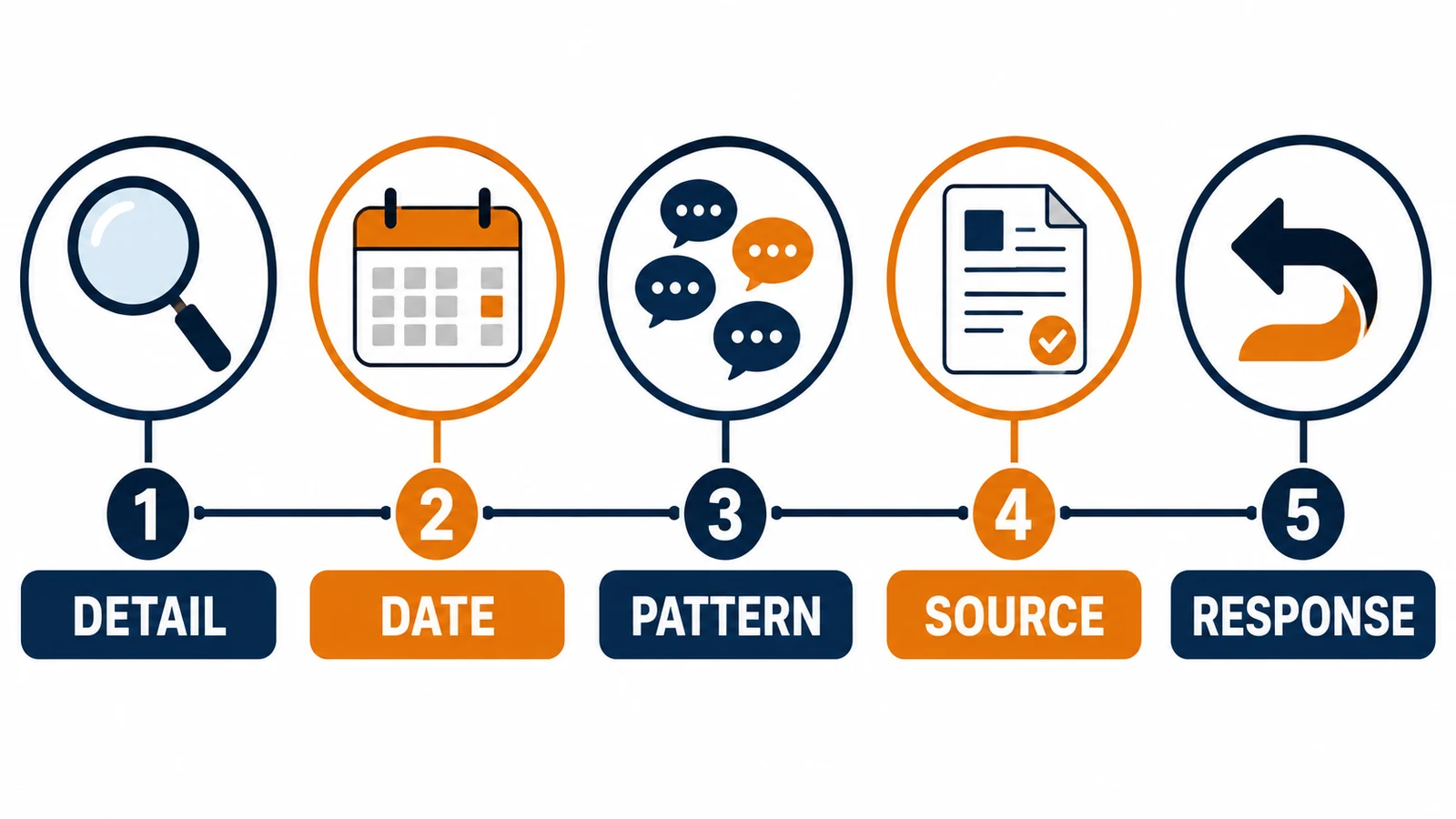
Check five things:
- Detail: does the writer describe a real part of the service?
- Date: is the experience recent enough to inform your choice?
- Pattern: do several comments describe the same behaviour?
- Platform context: are the comments tied to the service you need?
- Response: does the provider answer criticism with facts and restraint?
A high star average can be useful. It can also hide a small sample, old comments or a mixture of services. Keep the rating in proportion to what the comments actually show.
If a review leaves you unsure about report scope or timing, write down a question about property valuation that names the missing fact before you contact a provider.
What a review can tell you
A detailed comment may reveal whether the provider explained the appointment, arrived when promised, answered questions or corrected a factual error. Those details matter when communication is part of the work.
Reviews are weaker evidence for technical matters. A customer may not know whether the comparable evidence was suitable or whether the report met a lender’s conditions. The reviewer’s experience is real; the conclusion about professional quality may go beyond what the comment supports.
A five-part review check
1. Look for detail
A useful review says what happened: the property type, the appointment, the questions asked, the timing or the way a correction was handled. “Great service” gives you little to test.
Read the nouns and verbs. A comment about access, documents or explanation is more informative than a string of praise. Do not infer a technical standard from adjectives alone.
2. Check the date
A recent comment is more likely to reflect the current team and working method. Old comments can still show a pattern, though staff, fees, software and report arrangements may have changed.
Write down the date beside the impression. A page with many old comments and a handful of recent ones deserves a closer look at the recent group.
3. Check the pattern
One complaint can describe an unusual file. One compliment can describe an easy one. Several independent comments that mention the same behaviour give a stronger signal about communication or punctuality.
Patterns need context. A provider handling complex cases may receive comments about longer timelines because the files need more work. That is a question to ask, not automatic proof of poor service.
4. Check what service the review covers
A company can offer valuations, sales support, management or mortgage advice. A review about one service may say little about the person who will prepare your report.
Match the comment to your assignment. Look for the property type, the reason for the valuation and the person who did the work. If those details are missing, keep the review’s weight low.
5. Check the response
A calm response can show that the provider takes questions seriously. Look for a reply that addresses facts without revealing private customer information. A defensive reply, a promise of a perfect result or pressure to remove criticism tells you something about communication.
No response is not proof of a problem. Some platforms limit replies and some providers handle complaints privately. Treat the response as one clue beside the original comment.
What reviews cannot establish
Reviews do not prove registration, independence or report acceptance.
Search for the person who will sign the report and ask the report recipient which conditions apply.
Reviews also do not establish the value conclusion. A happy customer may have liked the process while disagreeing with the final number. An unhappy customer may have expected an outcome the evidence could not support. Read the experience, then separate it from claims about the result.
Situations that need extra care
A new provider with few reviews
Few comments do not prove poor work. Ask for registration, the person’s experience, assignment fit and a clear proposal. A smaller review history means you have less public evidence, so the written answers matter more.
A profile with many perfect ratings
Look at the distribution, dates and detail. A long list of identical one-line comments tells you less than a smaller set of varied, concrete experiences. Never accuse a provider of manipulation from appearance alone; use the pattern as a reason to ask careful questions.
Mixed reviews after a disputed value
Separate dissatisfaction with the conclusion from a problem in the process. Ask whether the complaint concerns missed facts, poor communication, a report condition or a difference of opinion. The distinction keeps the review fair.
Common reading errors
The first error is treating the average as a measurement of technical quality. The second is counting every review as if it describes the service you need. The third is ignoring dates and the identity of the professional.
Another error is allowing reviews to replace a written brief. A provider can communicate well and still lack the experience or report format your file requires. Keep the review check and assignment check side by side.
Combine reviews with assignment evidence
Write three notes after reading a profile: what the comments show, what they leave open and what question you will ask.
Then request the same information from each provider.
FAQ about property appraiser reviews
Is the provider with the highest rating the best?
Not on that evidence alone. A rating describes reported experiences, not every part of a valuation. Compare the comments with registration, relevant work, independence and report conditions.
How many reviews should I trust?
There is no universal number. Read the detail, dates and service type. A small set of concrete, recent comments can tell you more about communication than a large set of generic lines.
Should a negative review disqualify a provider?
No. Read what happened, how recent it is and whether the provider responded. A repeated process problem deserves attention; a disagreement about an unsupported value may describe a different issue.
Can reviews prove that a report will be accepted?
No. Ask the report recipient and the provider about format, inspection, validation and timing. A customer review cannot answer those conditions for your file.
Should I mention reviews when asking for a quote?
You can mention a question raised by a review and ask for a factual answer. Keep the same brief for every provider so the comparison stays fair.
A review note you can keep
Record the provider, reviewer date, service described, concrete behaviour, open question and follow-up answer. Add the person who will inspect and sign, the registration result, report recipient, scope and full fee.
That record turns a quick impression into a decision you can explain. Reviews can point you towards useful questions; the assignment evidence decides whether the provider fits.
Beste Taxateur helps you organise the questions and evidence around how to assess property appraiser reviews, so you can compare providers and prepare the next step. The relevant lender, adviser, municipality or other party decides which report or evidence it accepts.
Ask a question about how to assess property appraiser reviews